Project Gallery
A few projects. Most of our projects are proprietary, so we can't share them. If you have questions about what we can do, drop us a line.
Water Treatment
Shady Cove Water Treatment
Shady Cove Water Treatment (Shady Cove, OR)
This project was an overhaul of legacy controls at a water treatment facility that draws from both well water and surface Rogue river water, in the southern Oregon city of Shady Cove. Four sites, tanks, sensors, multiple sub-system and legacy controls, half a dozen pumps, and multiple distribution networks. Our control system calculates and reports disinfection and solids filtration performance, and generates reports for demonstration of compliance. It also totalizes and logs production, raw water usage, and many other key plant metrics. Using our Control Center, about a hundred pieces of data are available for view, logging, and alarm from anywhere on the web.
College Park Water Treatment
College Park Water Treatment (Salem, OR)
This facility was an improvement project for a pair of sites delivering drinking water from two wells. An ATEC filtration treatment system was added, which we integrated with our control panels, along with controlling chlorination. The two sites communicate through VPN, so they can run lead/lag as necessary and provide backup. Treatment and production conditions and statistics are reported to II Control Center for monitoring and alarms.
Lombard Water Treatment
Lombard Water Treatment (Salem, OR)
This project is very similar to the College Park project, with the addition of a filtration treatment system to a water treatment facility. Chlorination and distribution pressure are managed by the control panel.
Wastewater
Pfriem Family Brewers
Pfriem family brewers is a large enough brewery that the city/county mandates their wastewater discharge be treated and recorded. They do so with several tanks to manage solid and liquid discharge, and pH correction for both acidic and basic waste. The unit operations of the system are quite simple, but the controls narrative with state management and discharge optimization proved interesting. The discharge data and other system state information is sent to our cloud dashboard, where it can be set for alarms and notifications. Reports are generated for discharge quantity and pH for proof of compliance.
Mt. Hood Brewing
Mt. Hood Brewing, in the city of Government Camp, is required to take all of its brewing wastewater off the mountain. Naturally, this is very expensive, and they do whatever they can to minimize how much they pay to dispose of. They created a unique and innovative treatment system that uses biodigestion to break down organic matter in the waste stream. They aerate waste to assist this process, as well as pH-neutralizing it to within discharge limits. The control panel here monitors wastewater state, manages several pumps and valves that alternate between recirculation and transfer.
Northstar Chemical Smart Controller
Wastewater treatment Smart Controller
A collaboration between NorthStar Chemical and Interface Innovations, this project tackles a unique set of control problems for wastewater treatment, using NorthStar chemical products. Several chemicals coagulated solids from liquids, which were typically separated by a weir on a Dissolved Air Floatation (DAF). The controller was designed with a unique control algorithm that managed the very non-linear response of solids with the chemical additives.
This controller was deployed at several sites, including Reser's fine foods, Amy's Kichen, Kettle Foods, Organic Valley, and Patriot Environmental Services
Brewery Projects
Garvies Point Brewing
Brewhouse control panel
Obelisk Brewing
Brewhouse control panel
Matchless Brewing
Cellar control panel
Hammer and Stitch
Brewhouse control panel for Hammer and Stitch brewing.
Valdez Brewing
Brew and cellar control panels for Valdez Brewing.
Stemma Brewing
Cellar Panel at Stemma Brewing. Bellingham, WA. Seven vessels expandable to 14. 24x24 SS panel, 17" touchscreen and web UI.
Install 4/19
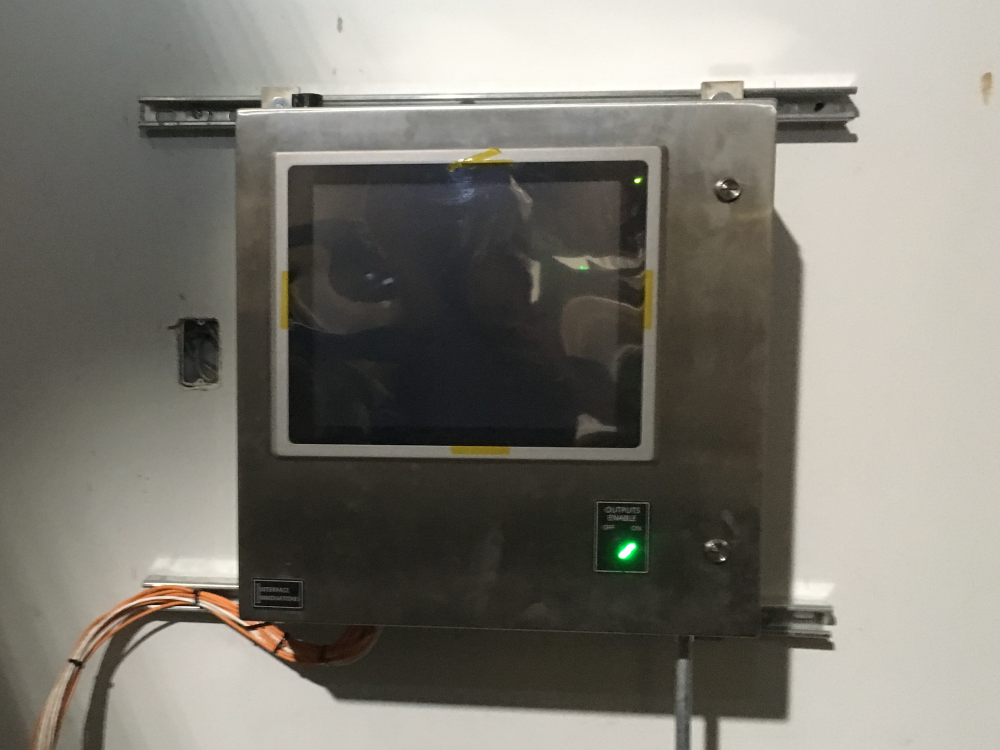
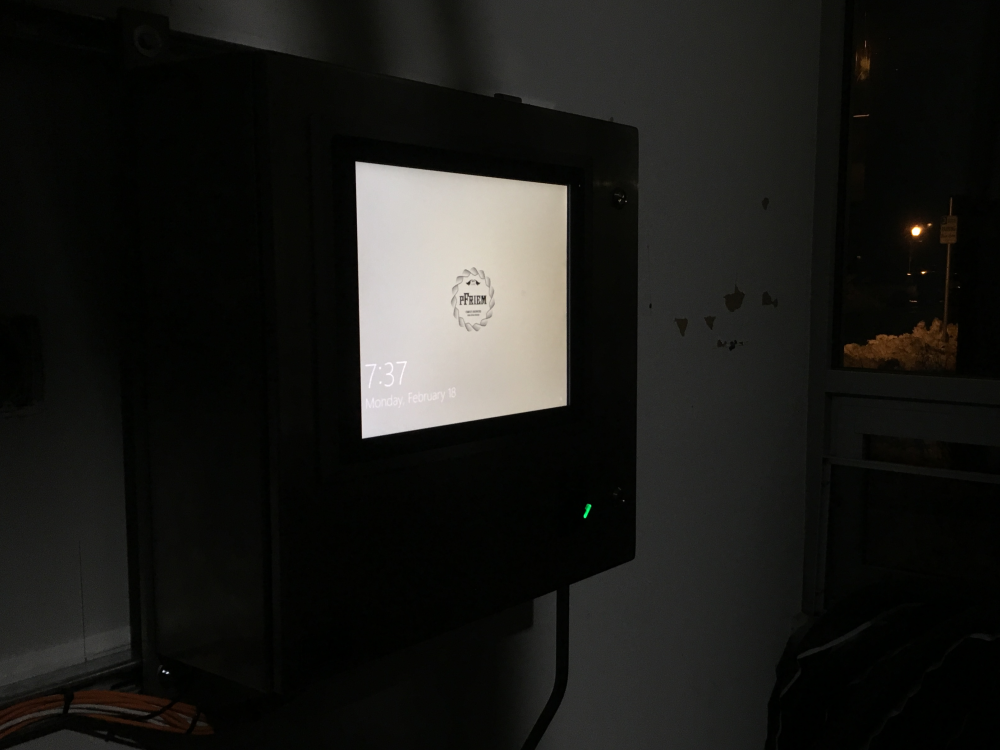
PFriem Family Brewers
Cellar Panel at Pfriem Family Brewers. Hood River, OR. Eleven vessels with dual inputs/outputs. Eight additional single input/output vessels, additional temperature inputs. 24x24 SS panel, 17" touchscreen and web UI.
One Lake Brewing
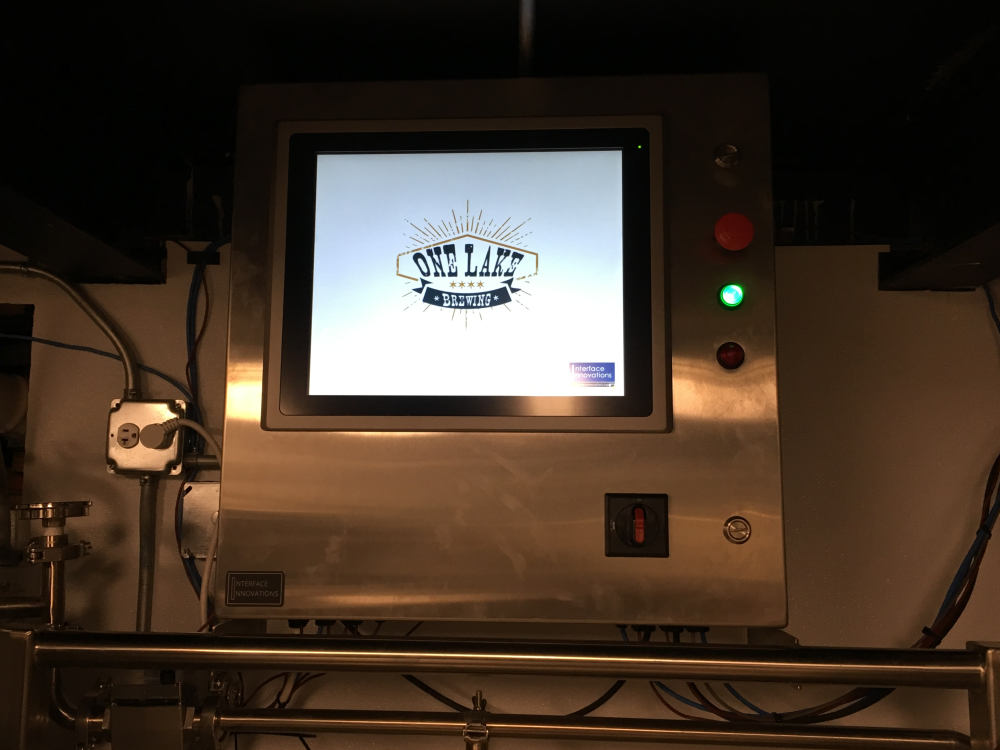
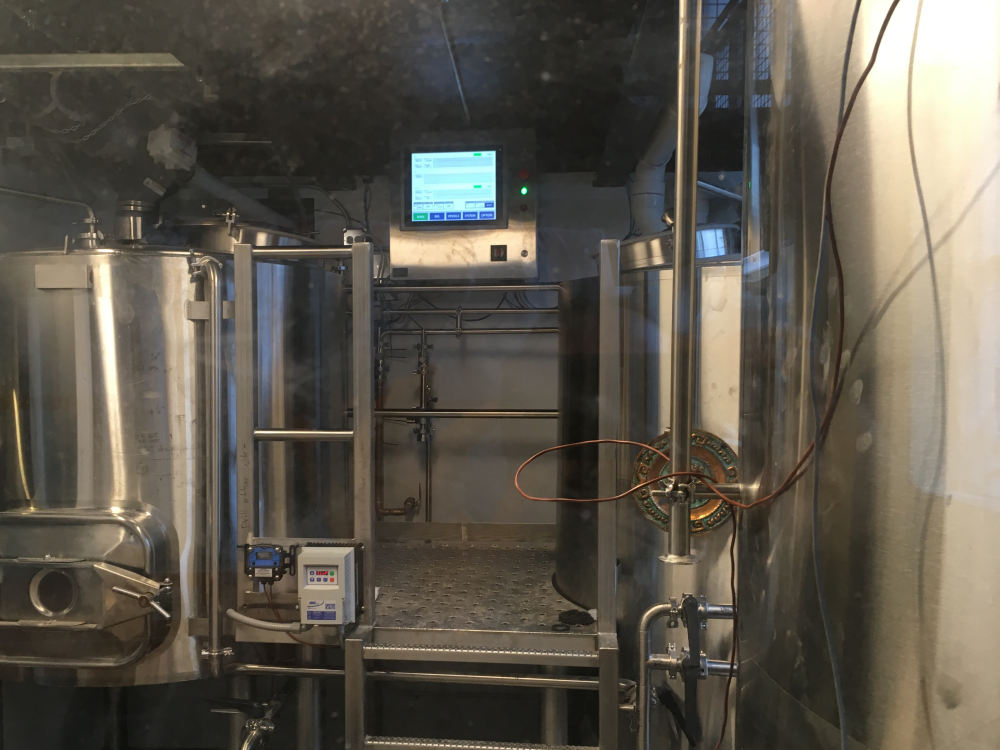
Brew and Cellar Panels at One Lake Brewing, Oak Park, IL.
Brew panel: 24x24 SS, 17" Touchscreen, PLC. Two vessel control, four temperature inputs. Flowmeter integration and readout. HLT 60A Power Panel for Electric Heating elements.
Cellar Panel: 24x24 SS, 17" Touchscreen. Twelve vessel control. Web UI.

Walter Station Brewing
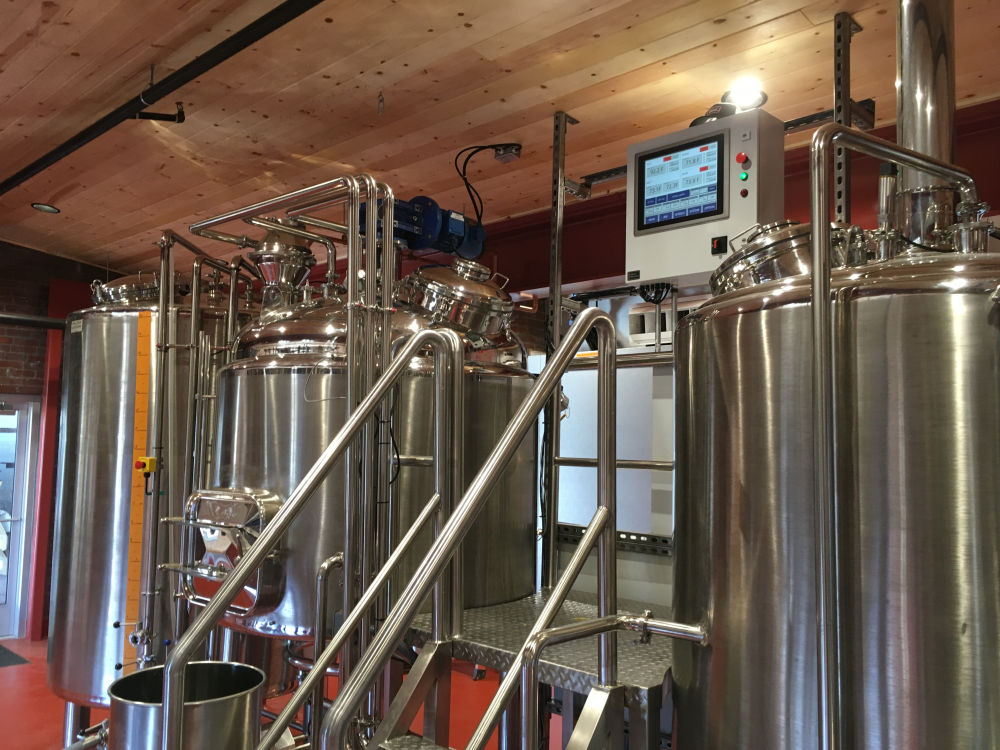
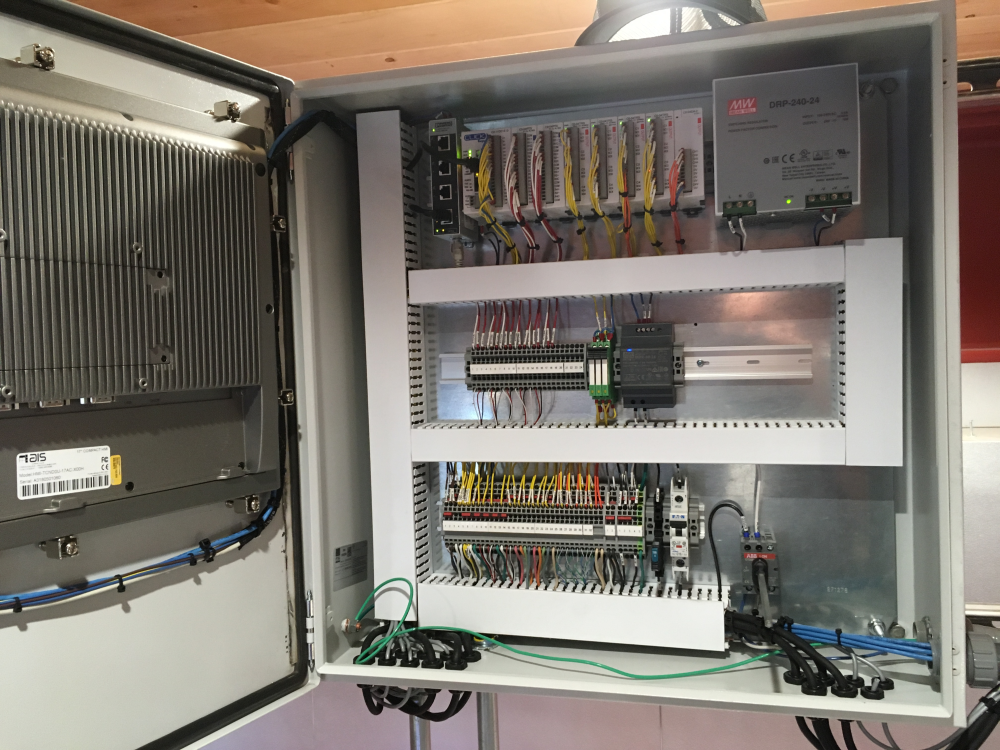
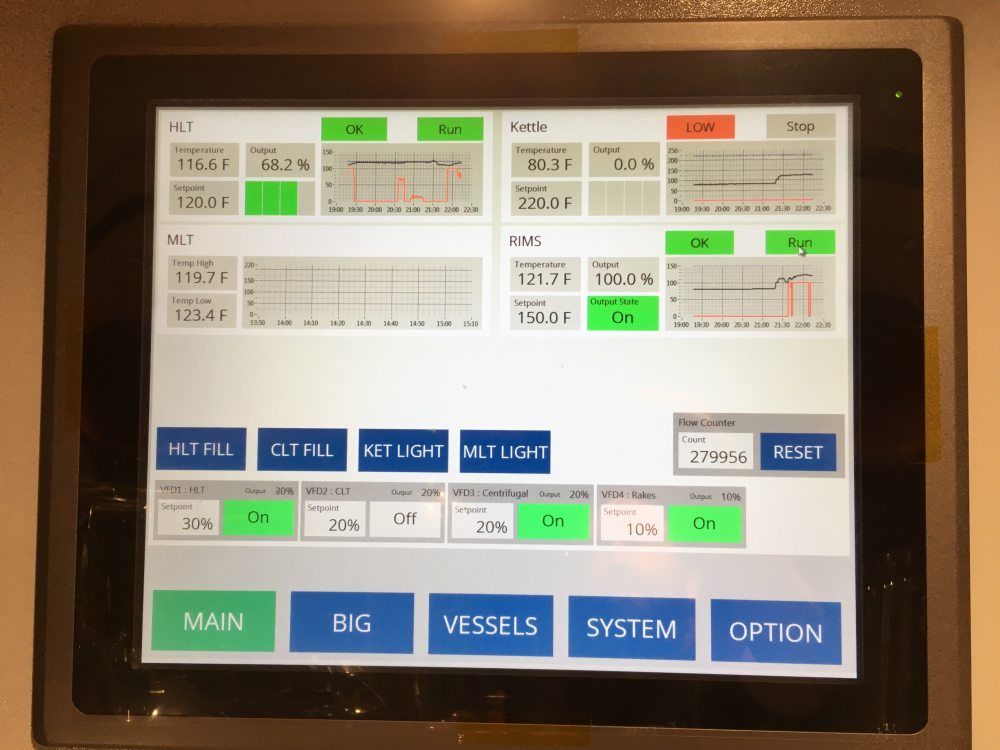
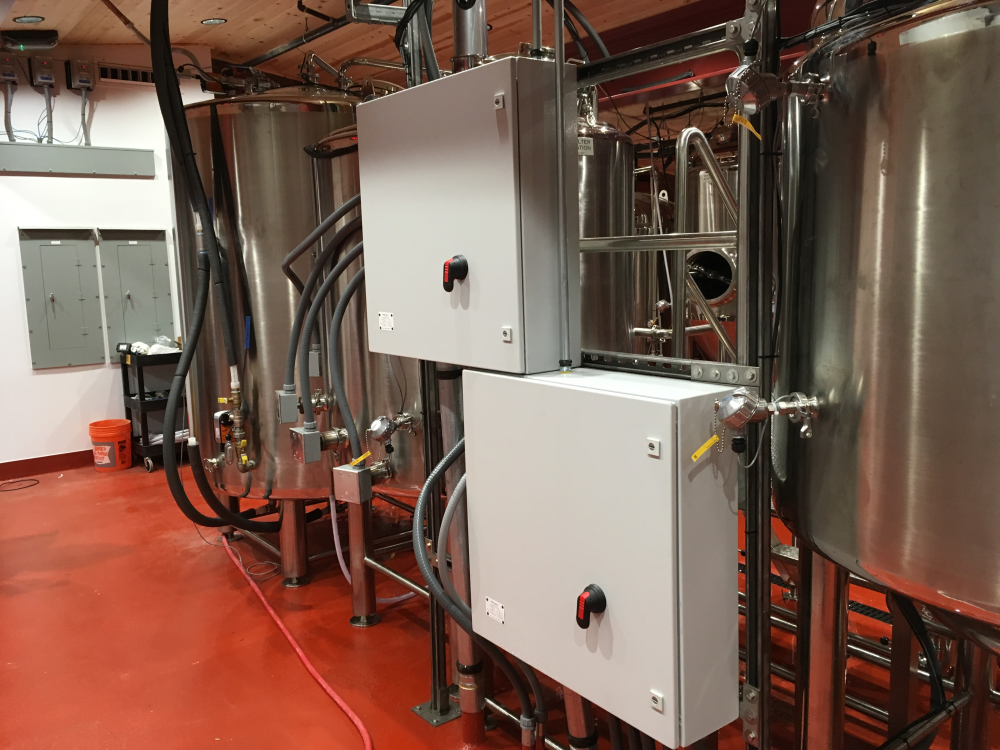
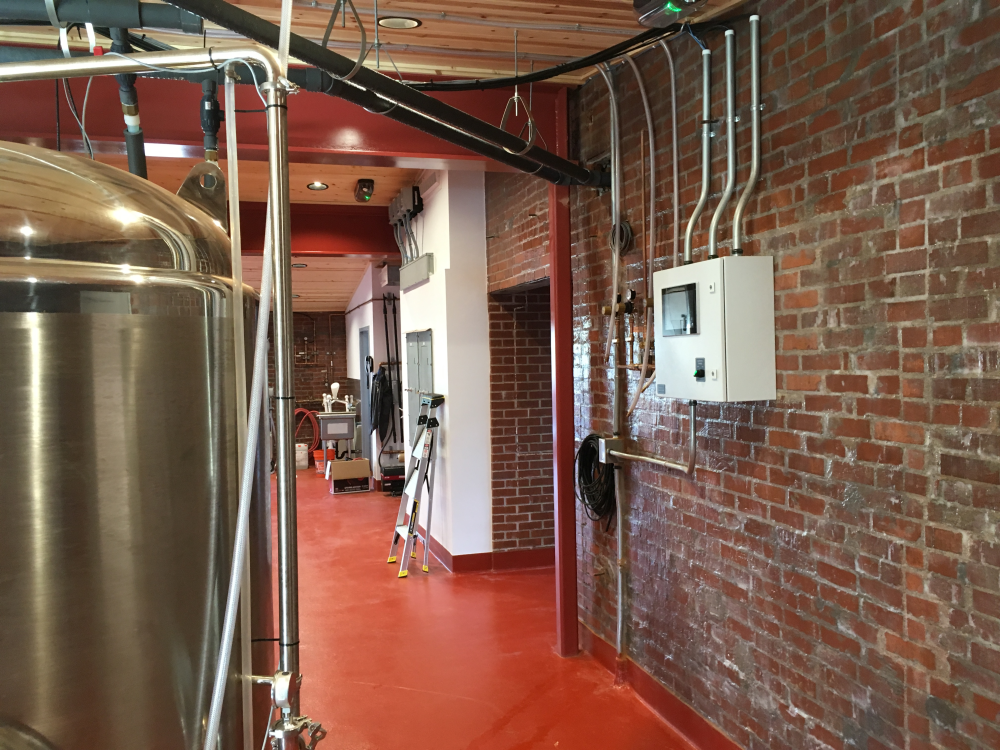
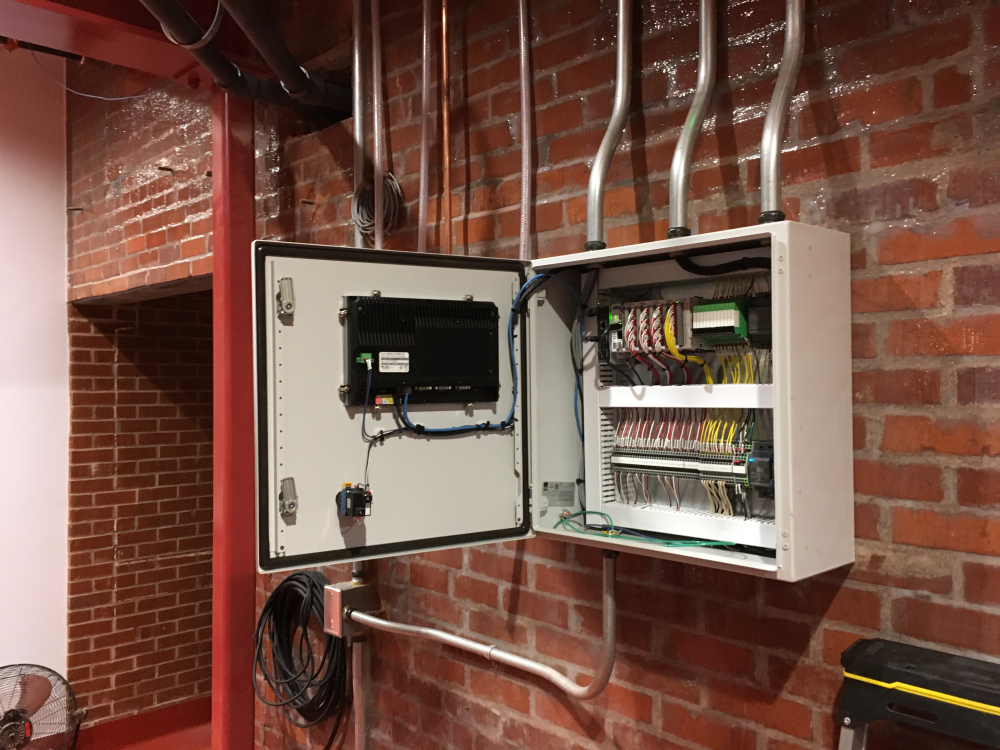
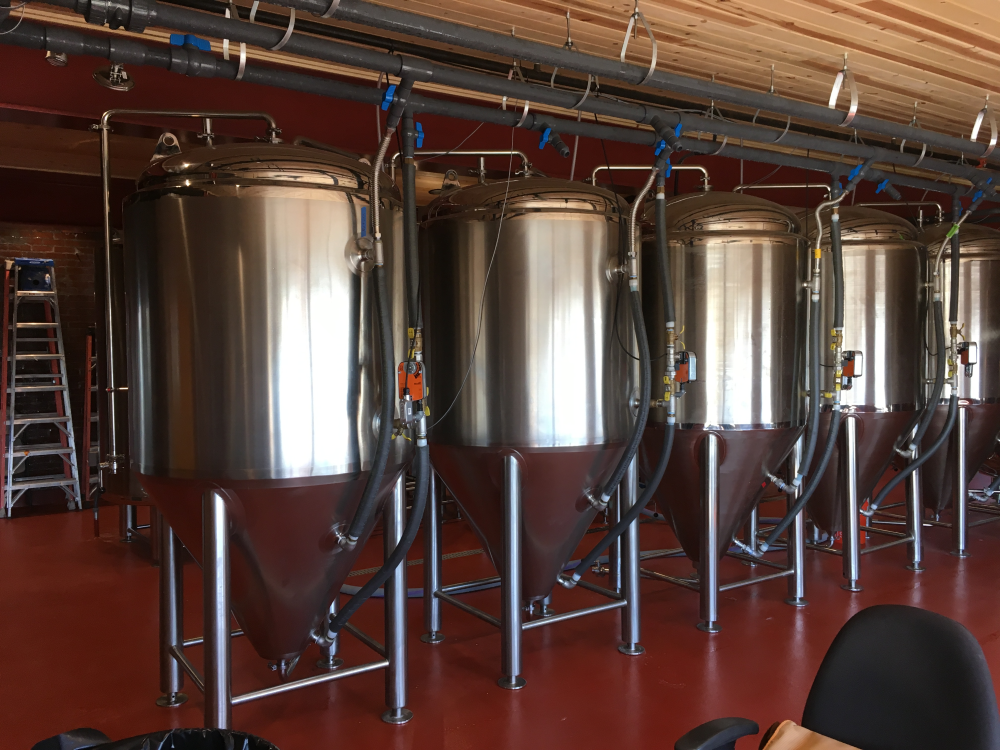
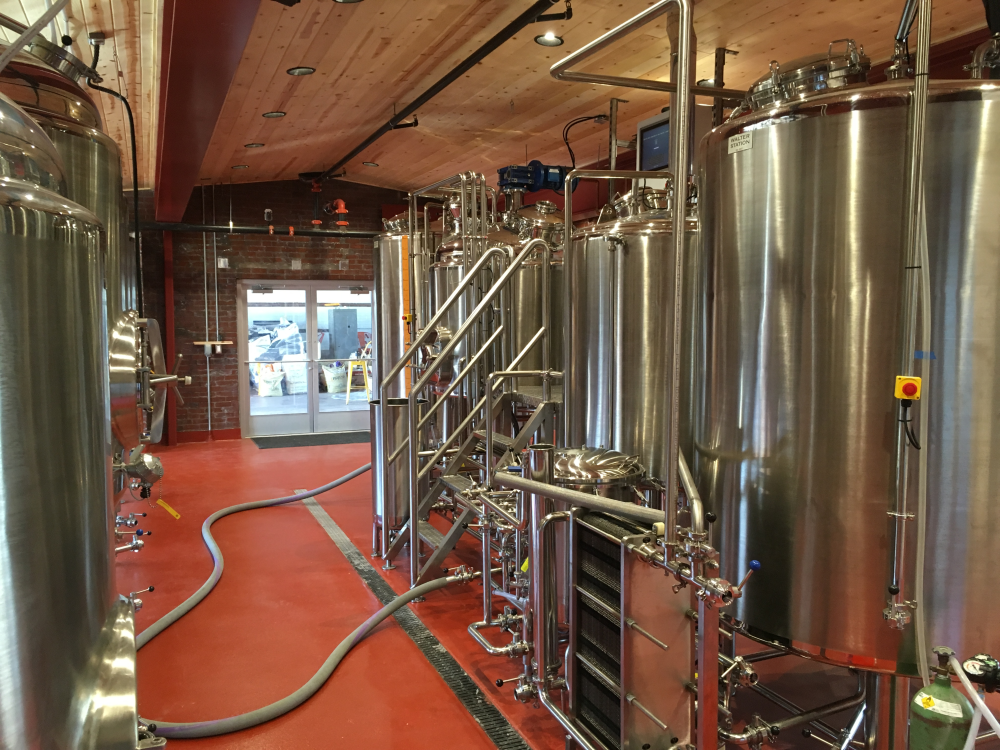
Brew and Cellar Panels at Walter Station Brewing, Phoenix, AZ.
Brew panel: 24x24, 17" Touchscreen, PLC. HLT, Kettle, and RIMS control. Electric power panels for nine heating elements. Four VFDs, controlled from touchcreen UI.
Cellar Panel: 20x20, 10" Touchscreen. Twelve vessel control. Web UI.
Wayfinder Beer
Cellar Panel at Wayfinder Beer, Portland, OR. Ten vessels with 10" touchscreen and web UI. Expansion capability for ten additional vessels built in.
Vanished Valley Brewing Co
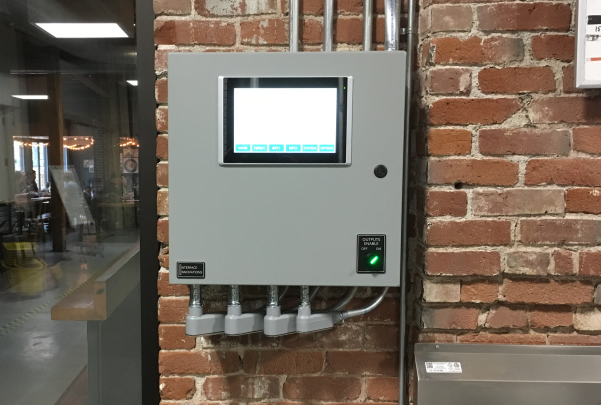
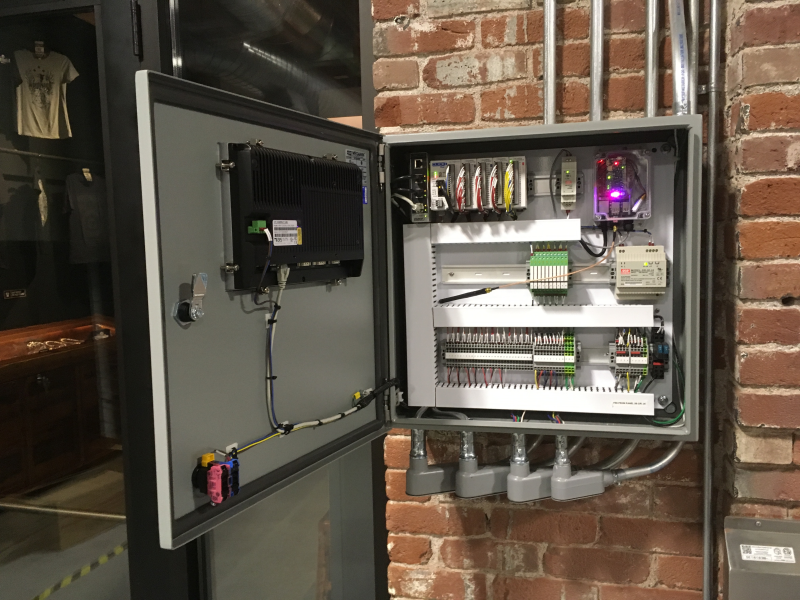
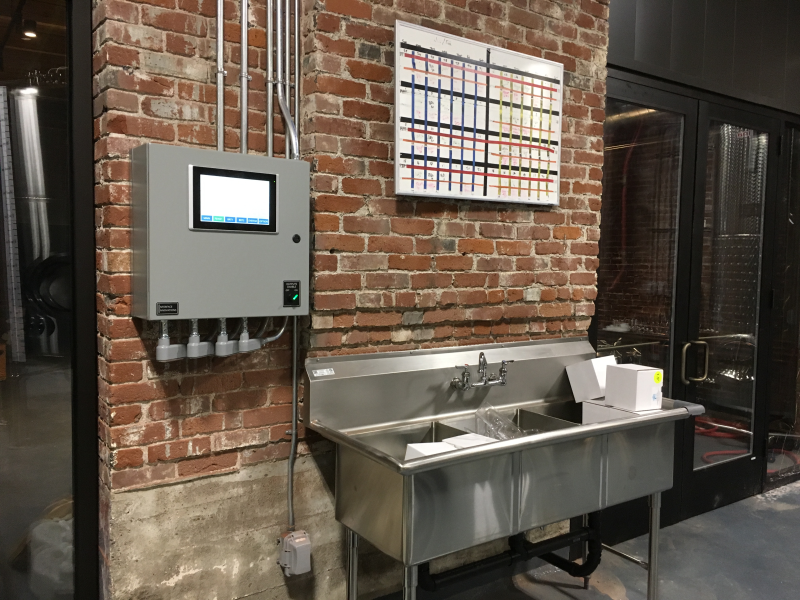
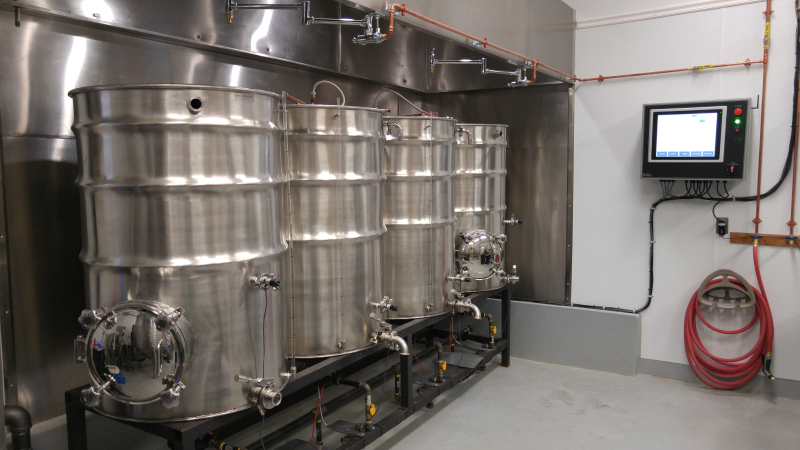
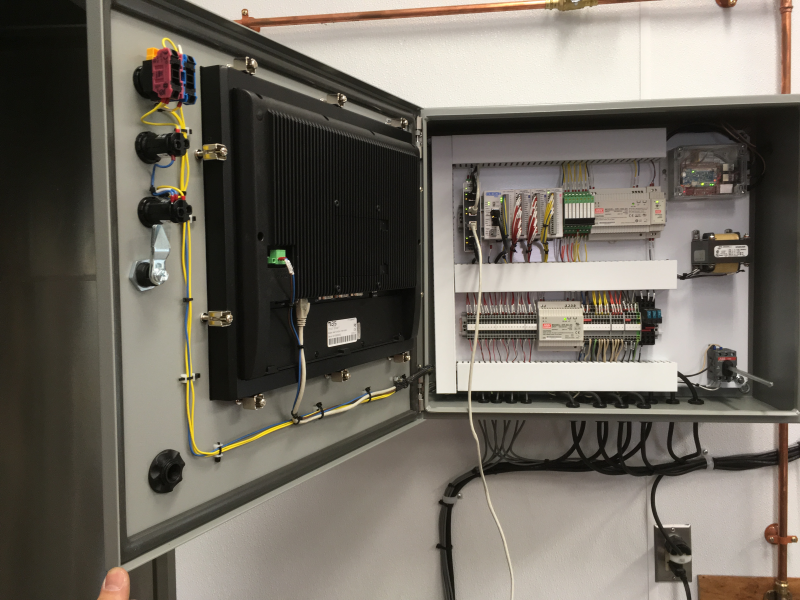
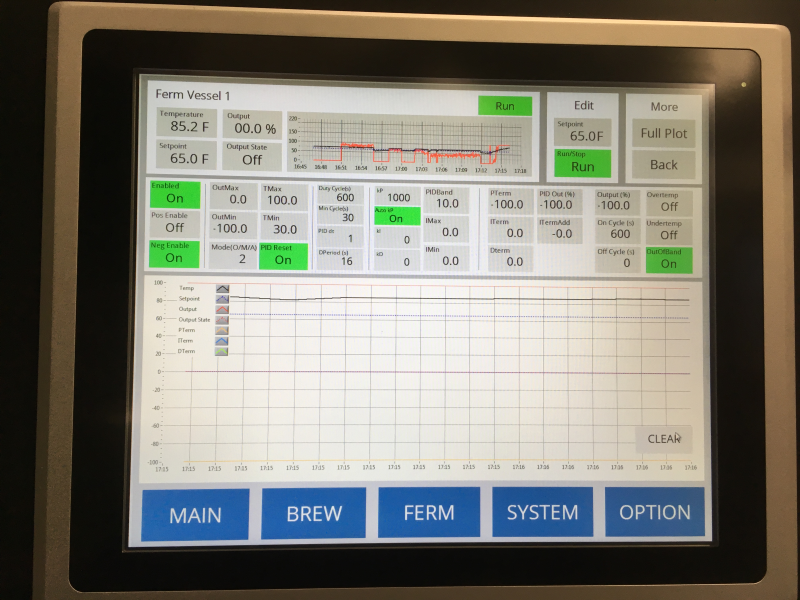
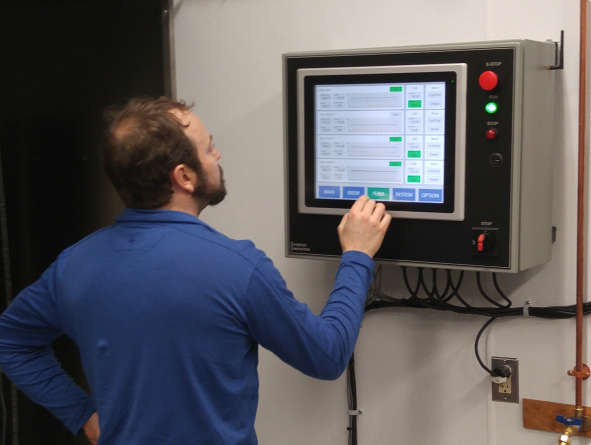
Brew Panel project at Vanished Valley Brewing Company, Ludlow, MA. Four brew vessels, three fermenters, one brite. 17" Touchscreen panel with network interface.
Lincoln Beer Company
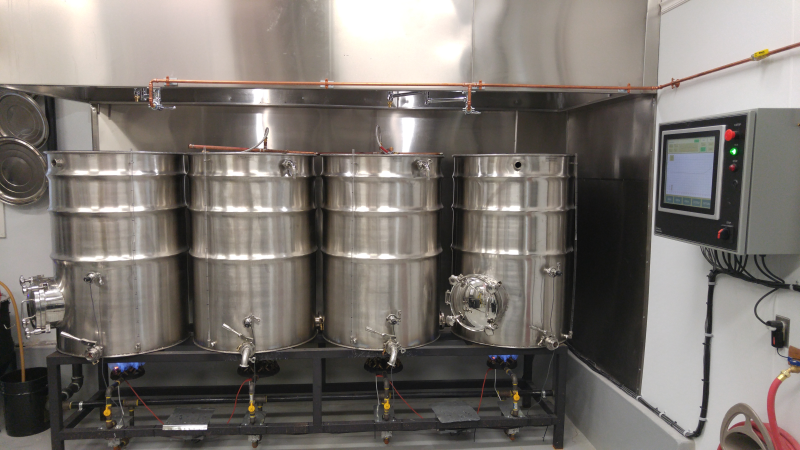
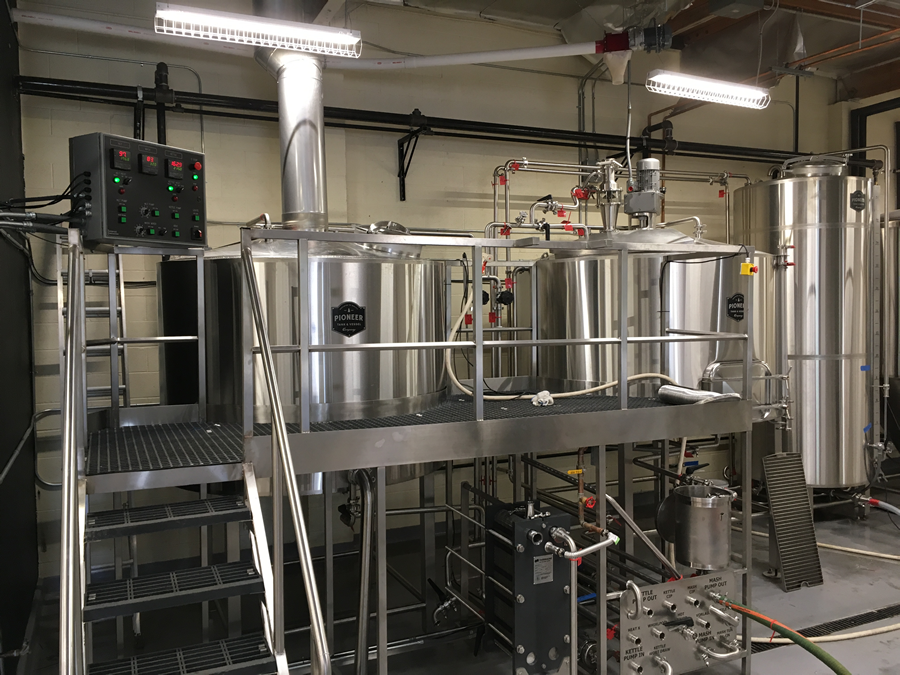
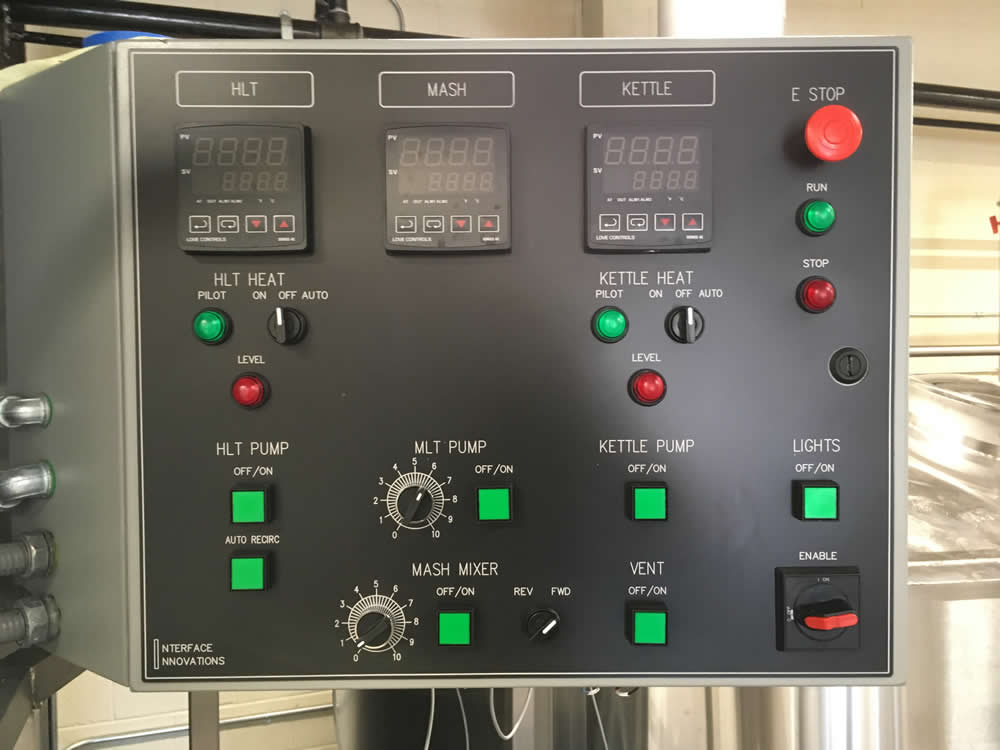
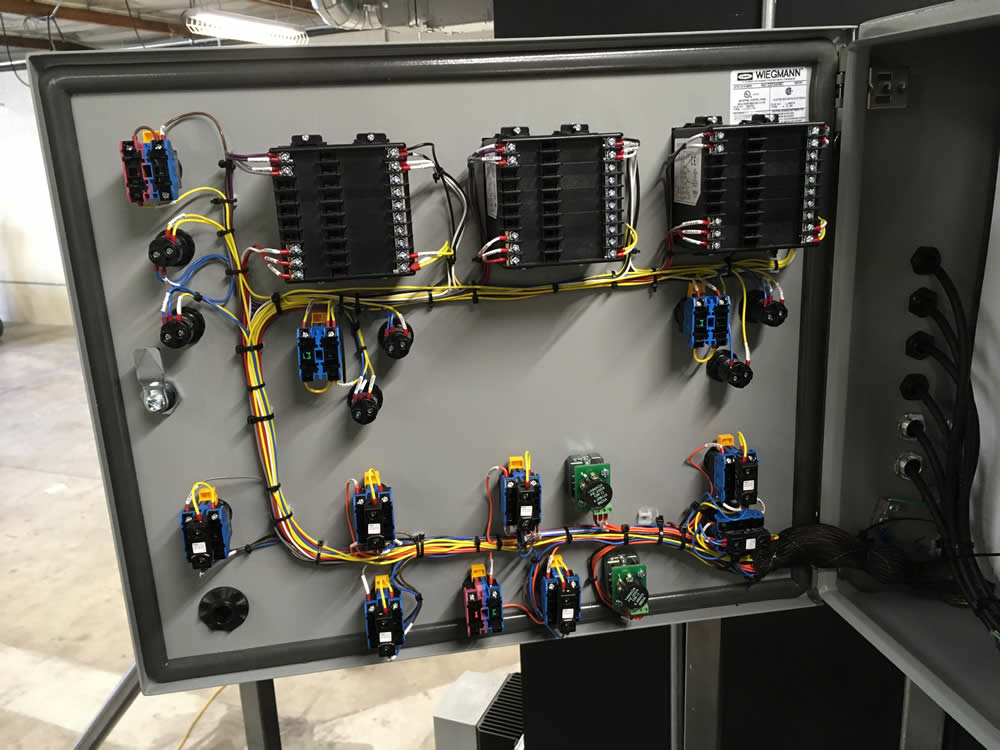
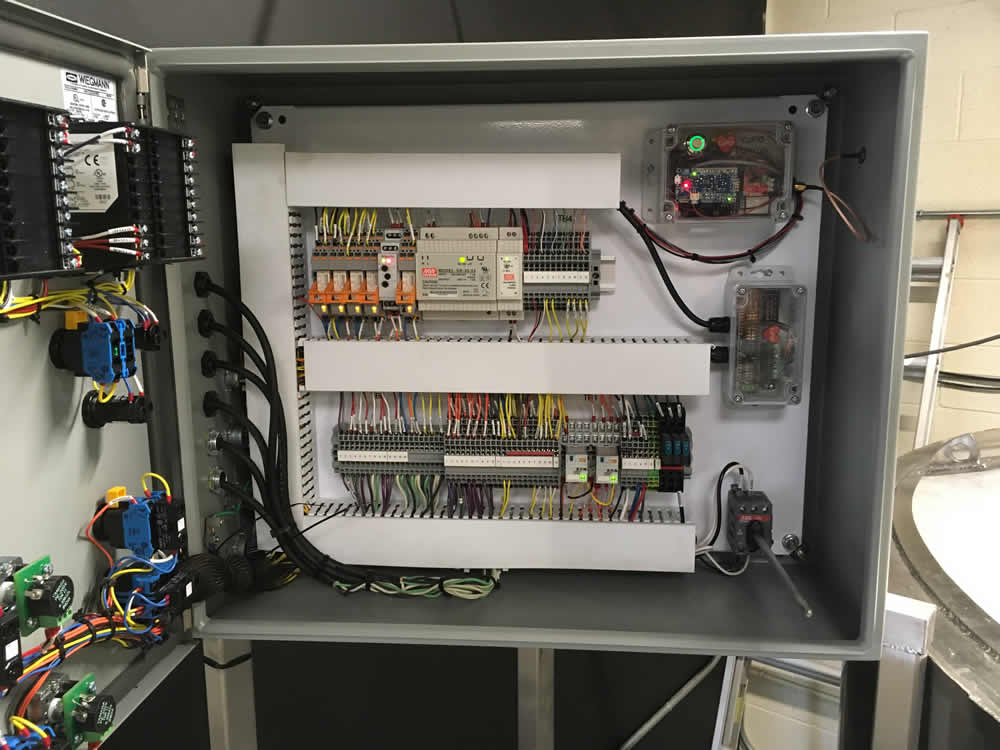
Brew Panel project at Lincoln Beer Company, Burbank, CA.

Montavilla Brew Works
Brew and Cellar Panel project at Montavilla Brew Works, Portland, OR
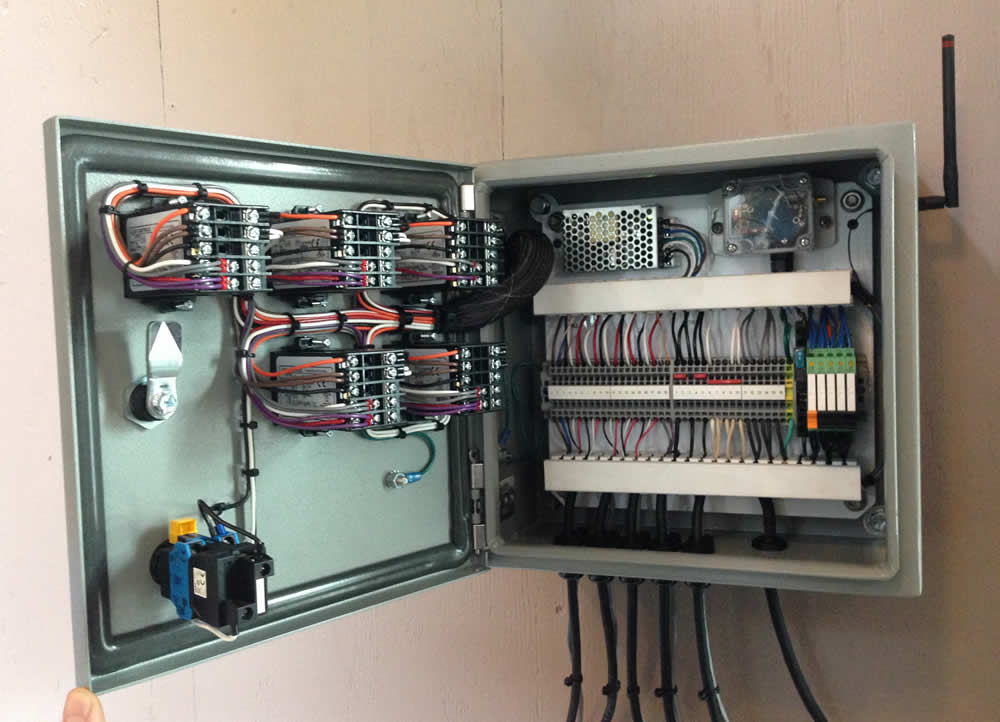
Brookeville Beer Farm
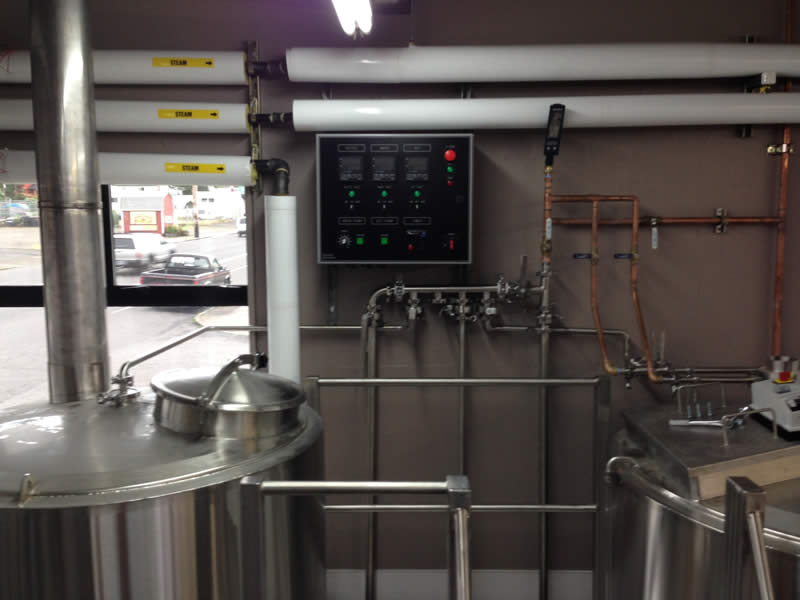
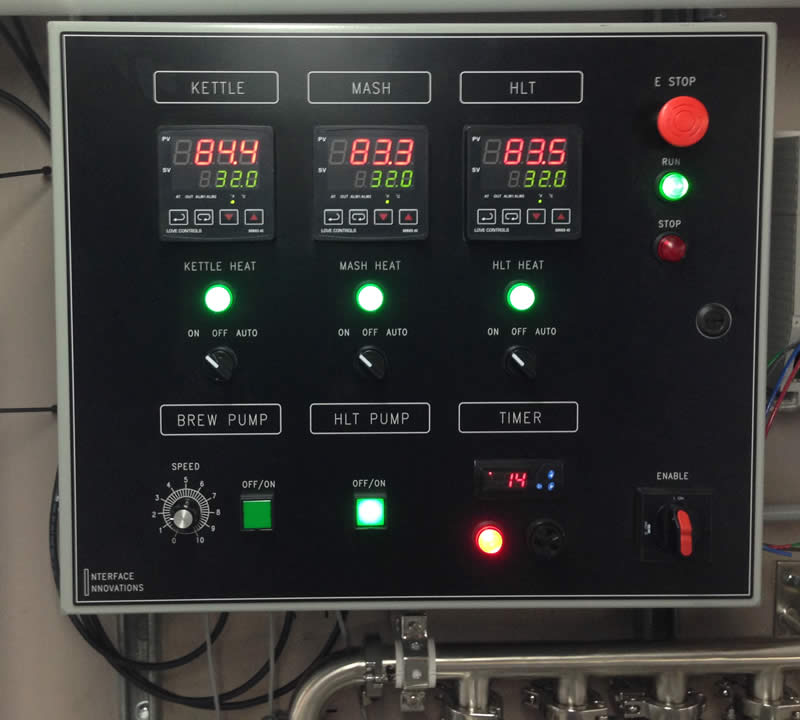
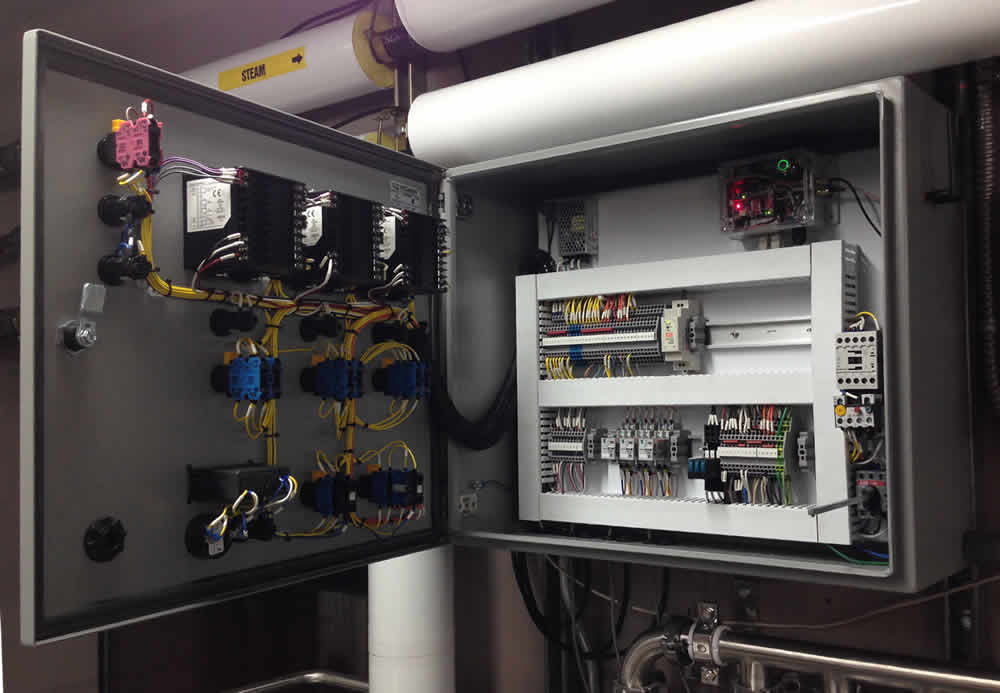
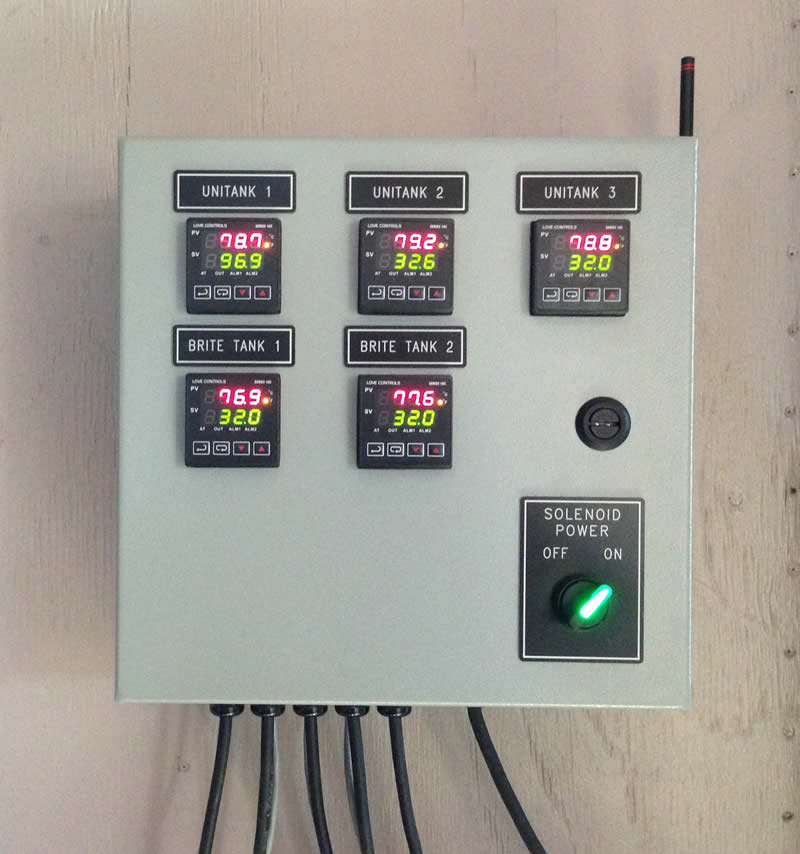
Brew and Cellar Panel project at Brookeville Beer Farm, Brookeville, MD
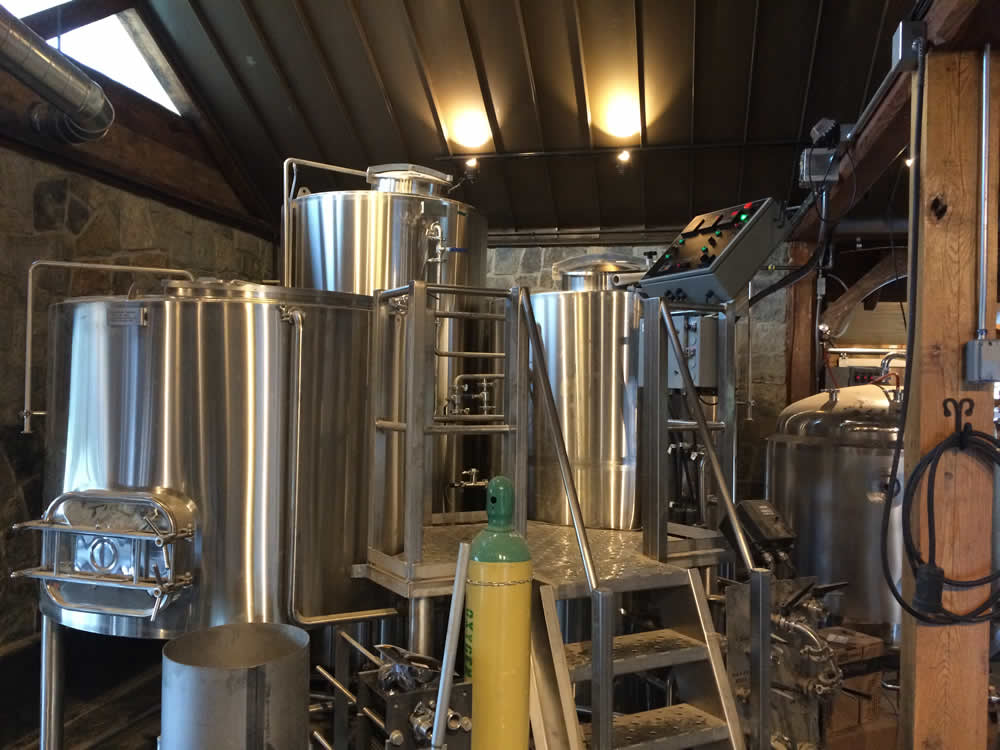
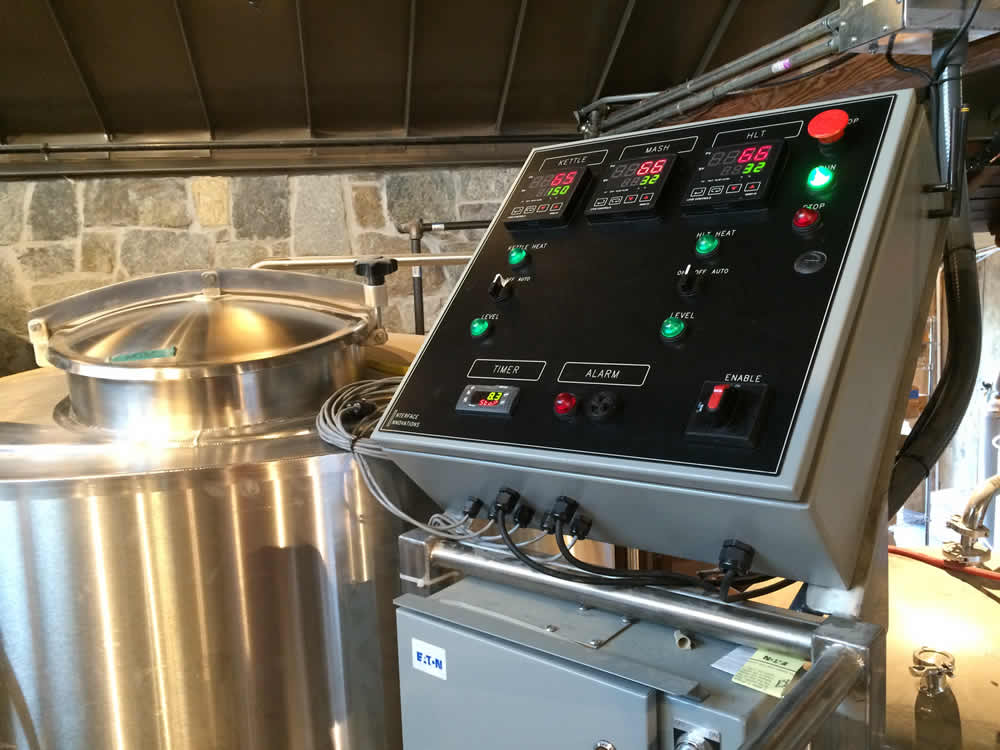
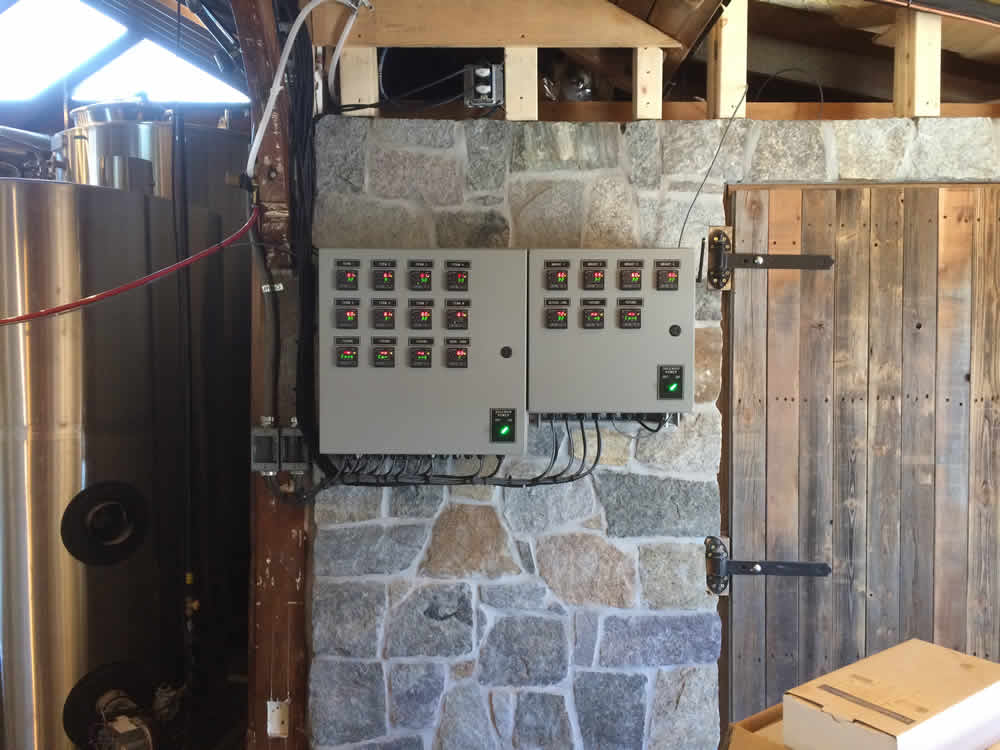
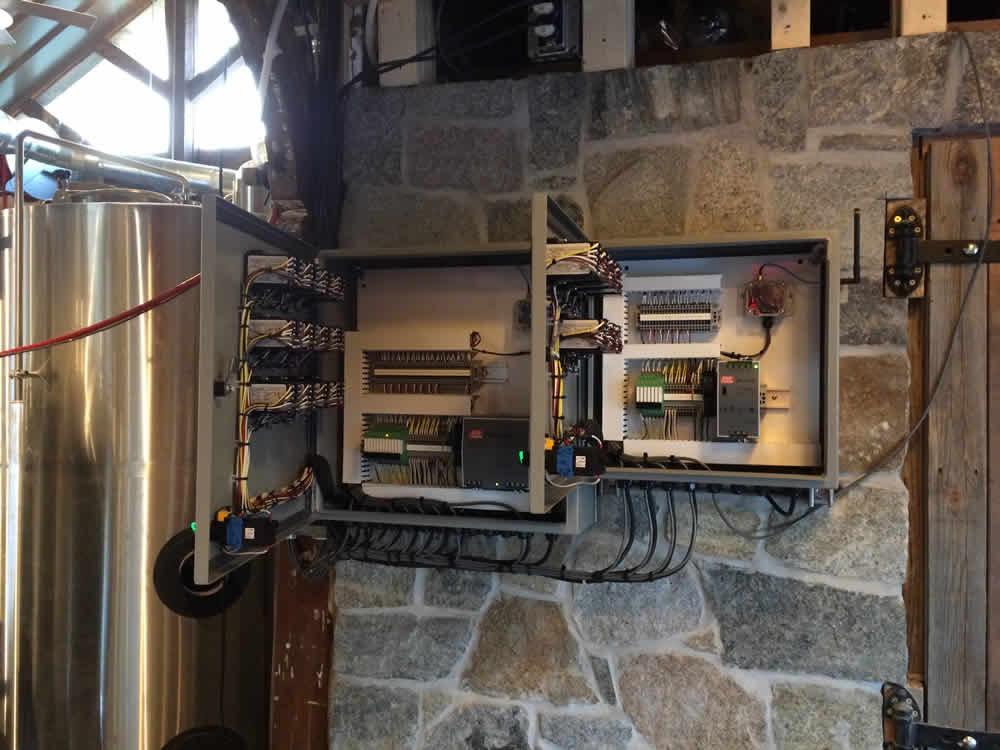
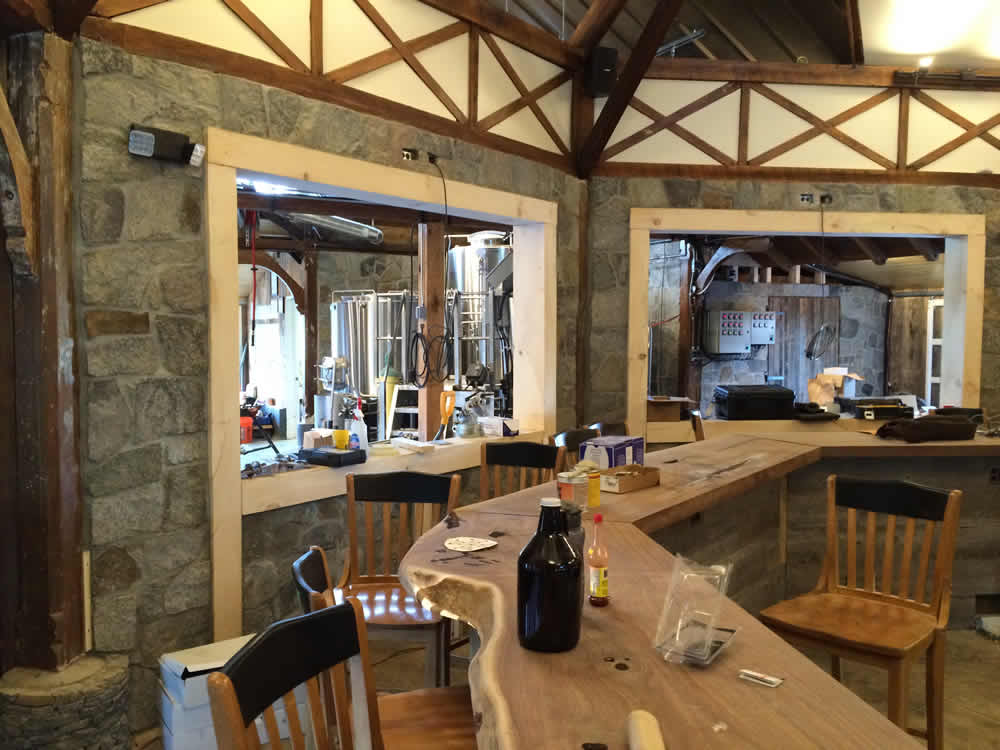
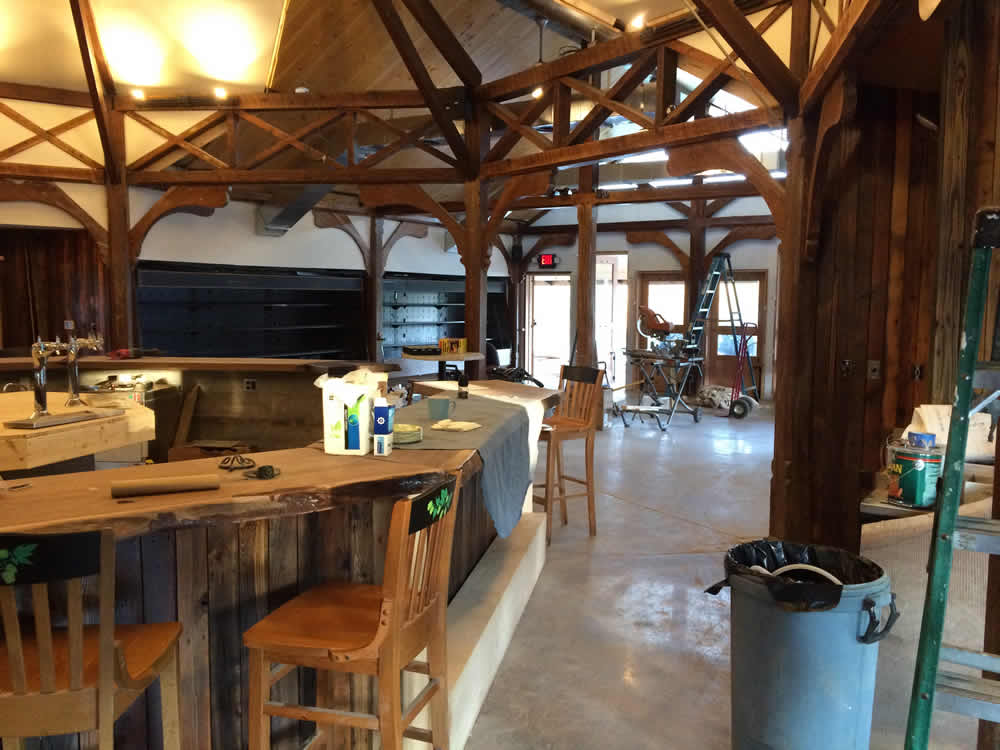
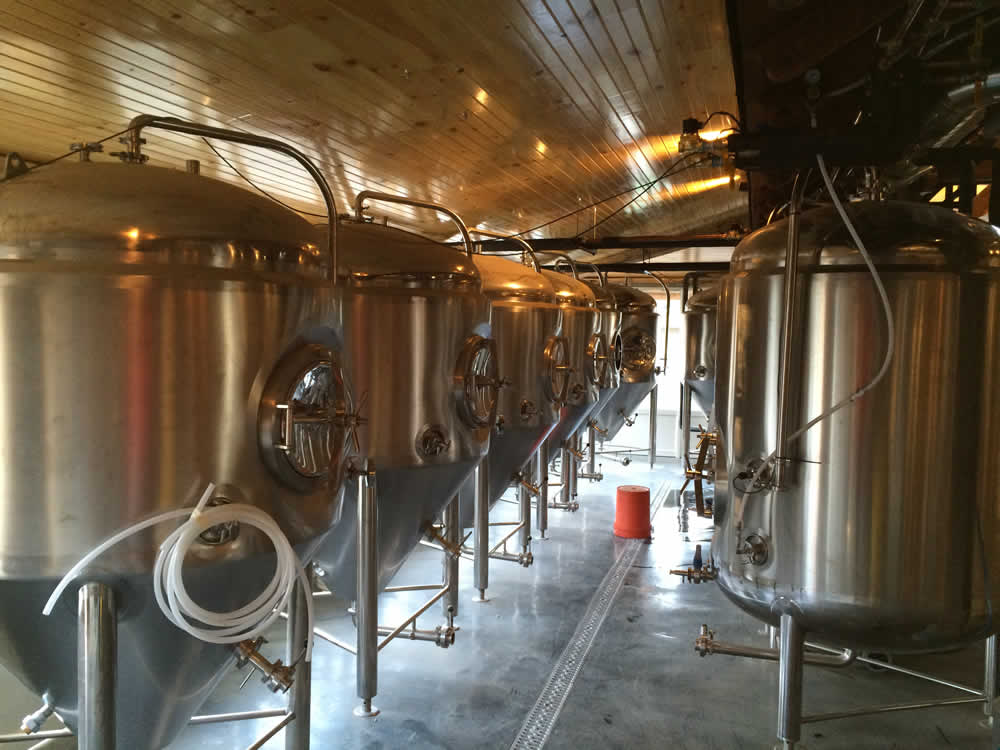
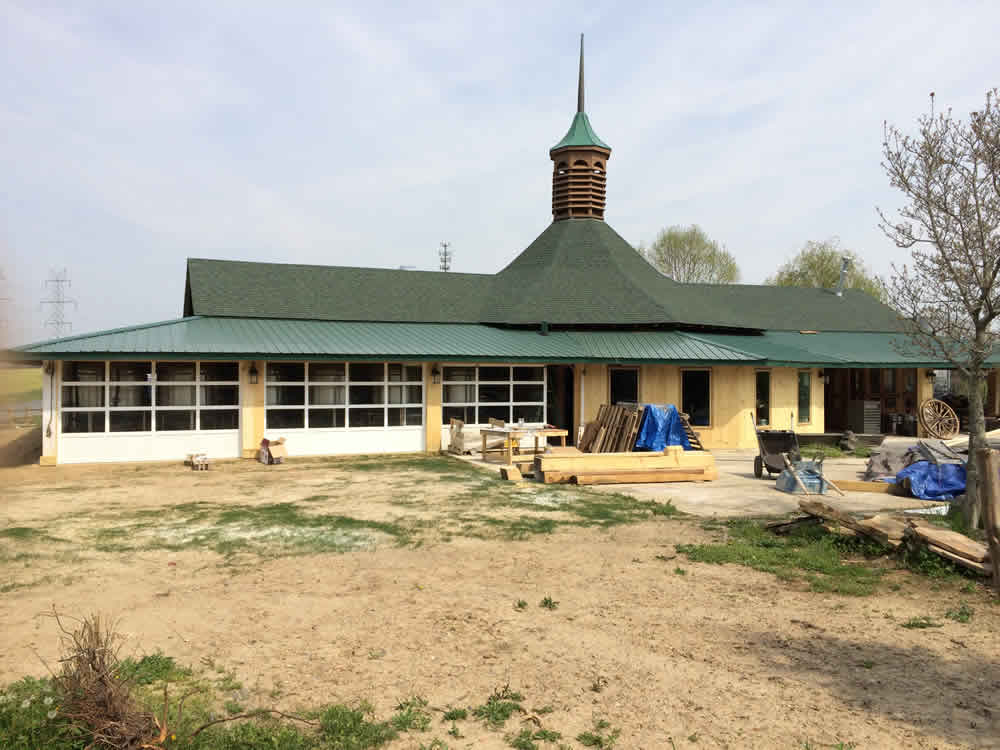
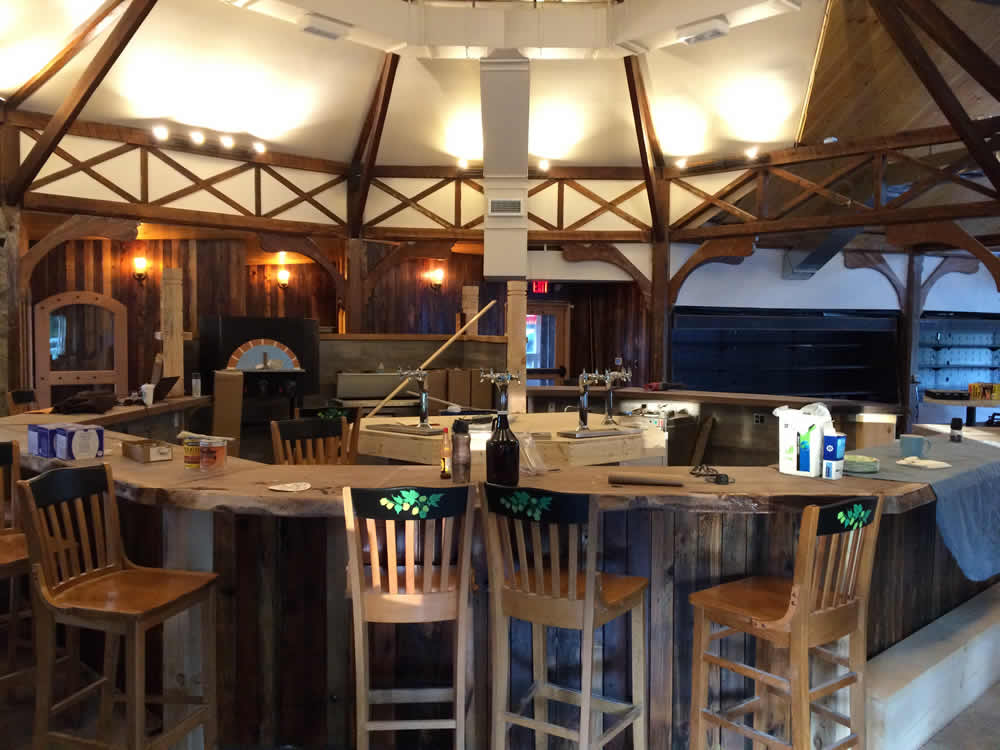
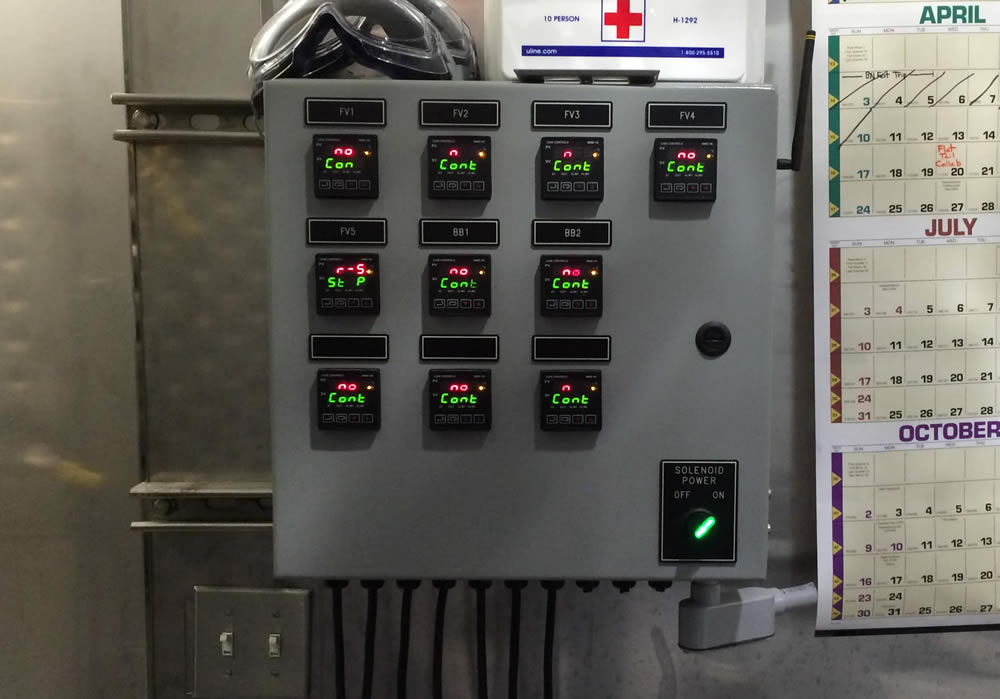
Yachats Brewing
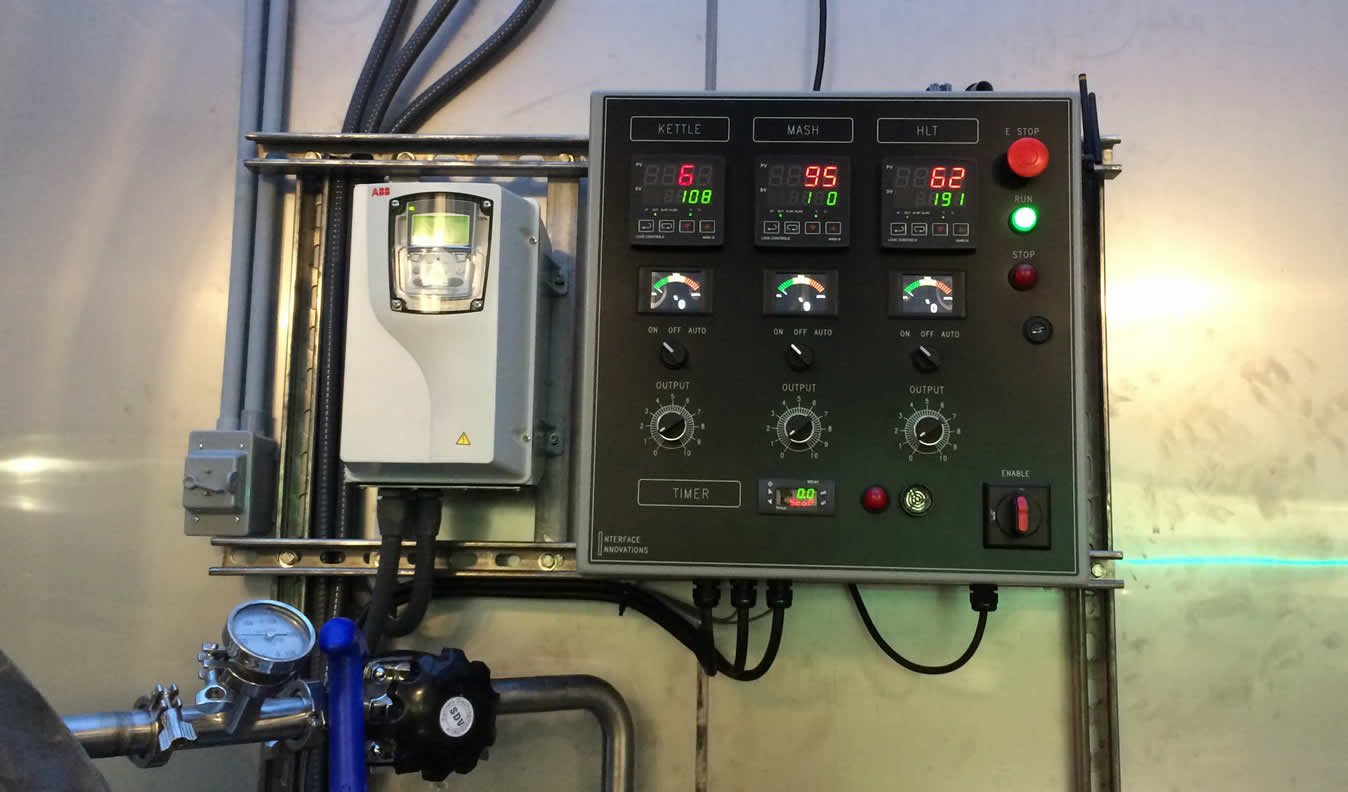
Other
Automated testing and load bank panel
Load bank and automated equipment testing
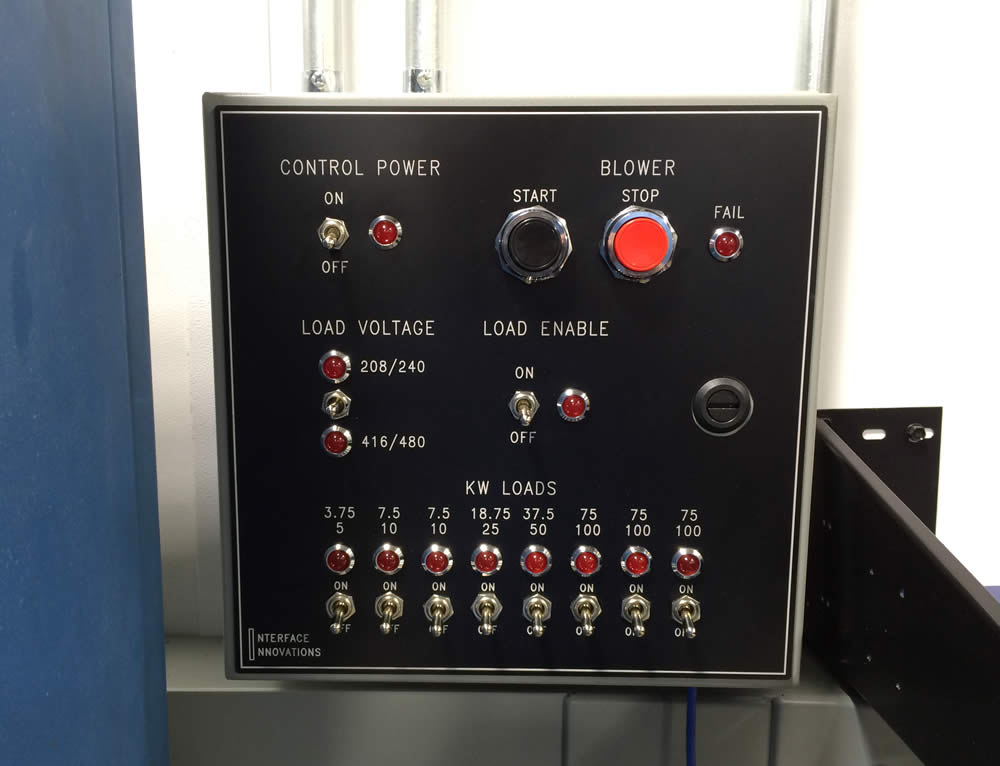
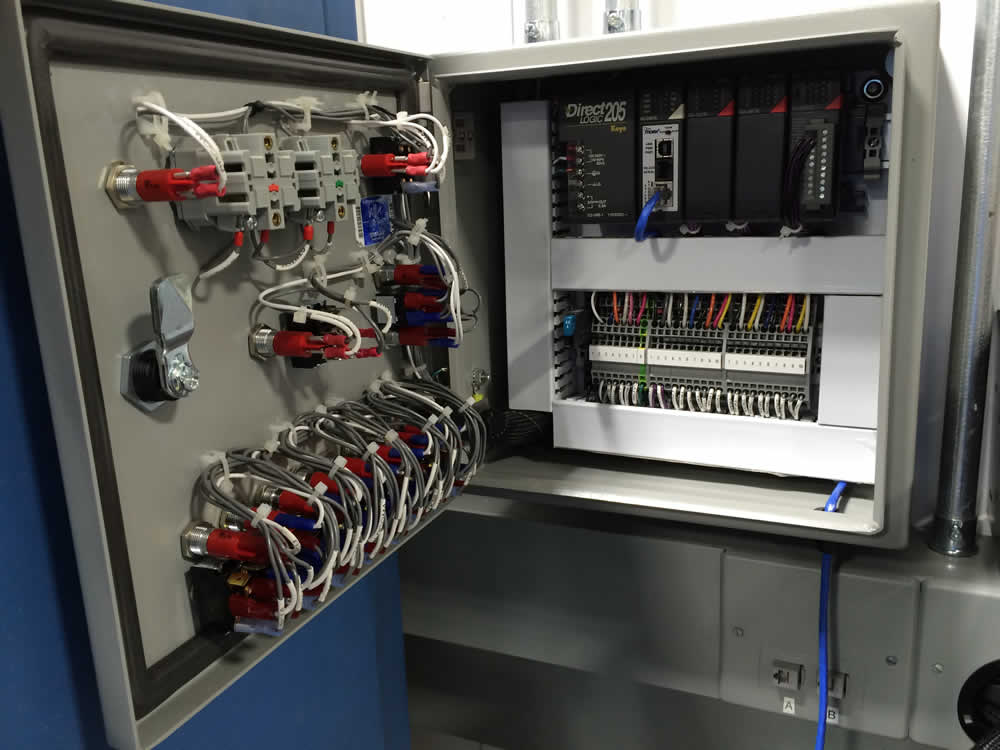
This project wrapped up a wide variety of sensing and control technologies. Shown here is one of two control panels for monitoring and control of this system. The end-use application is proprietary.
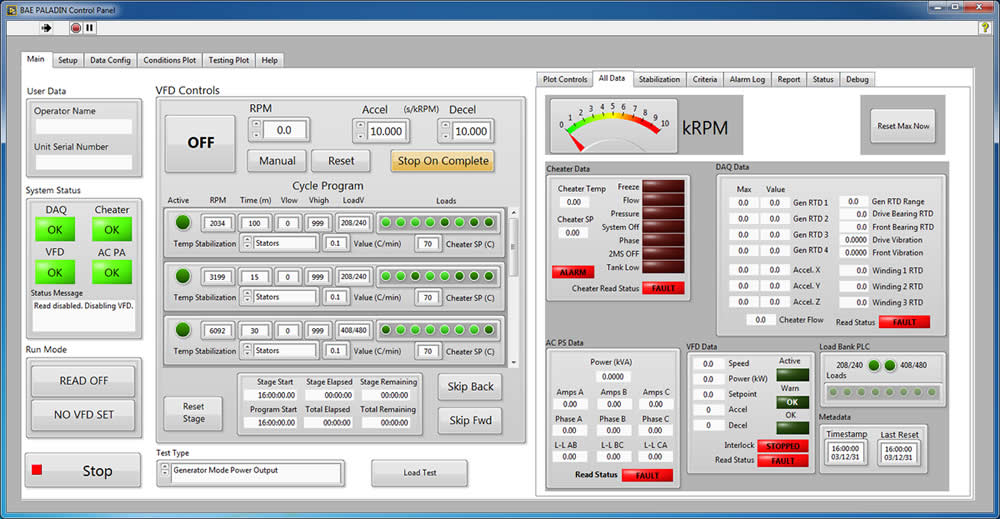
The LabVIEW interface was a built executable that completed an extended, complex testing sequence with adjustable alarms and fault criteria for every variable recorded to data logs. The results of the testing were used for acceptance criteria for an external customer for the product.
A few details:
- Remote VFD control over Modbus TCP/IP with custom frame formats
- Nine RTDs read through custom driver board with filtering into analog inputs
- Three accelerometers read into analog inputs
- Two vibration sensors read into analog inputs
- Chiller flow rate sensors read into analog input
- Chiller/heater setpoint and monitoring over RS232
- Power supply monitoring over TCP raw socket
- Load bank control via control panel pictured, through PLC over Modbus TCP/IP
Solar module testing
Remote temperature sensing and logging
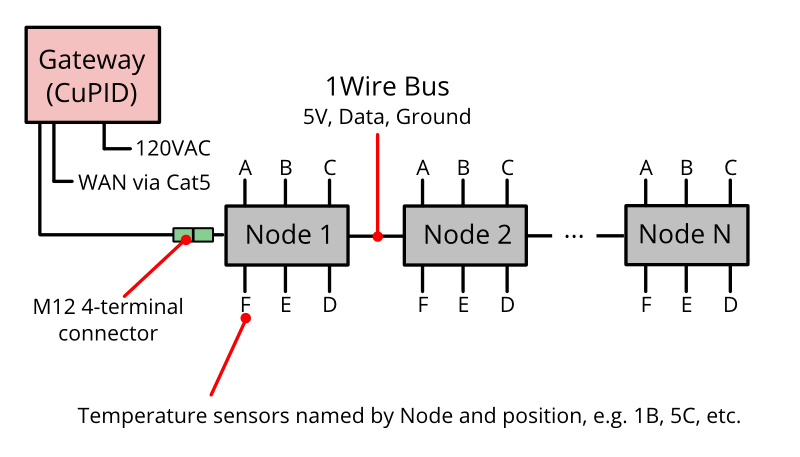
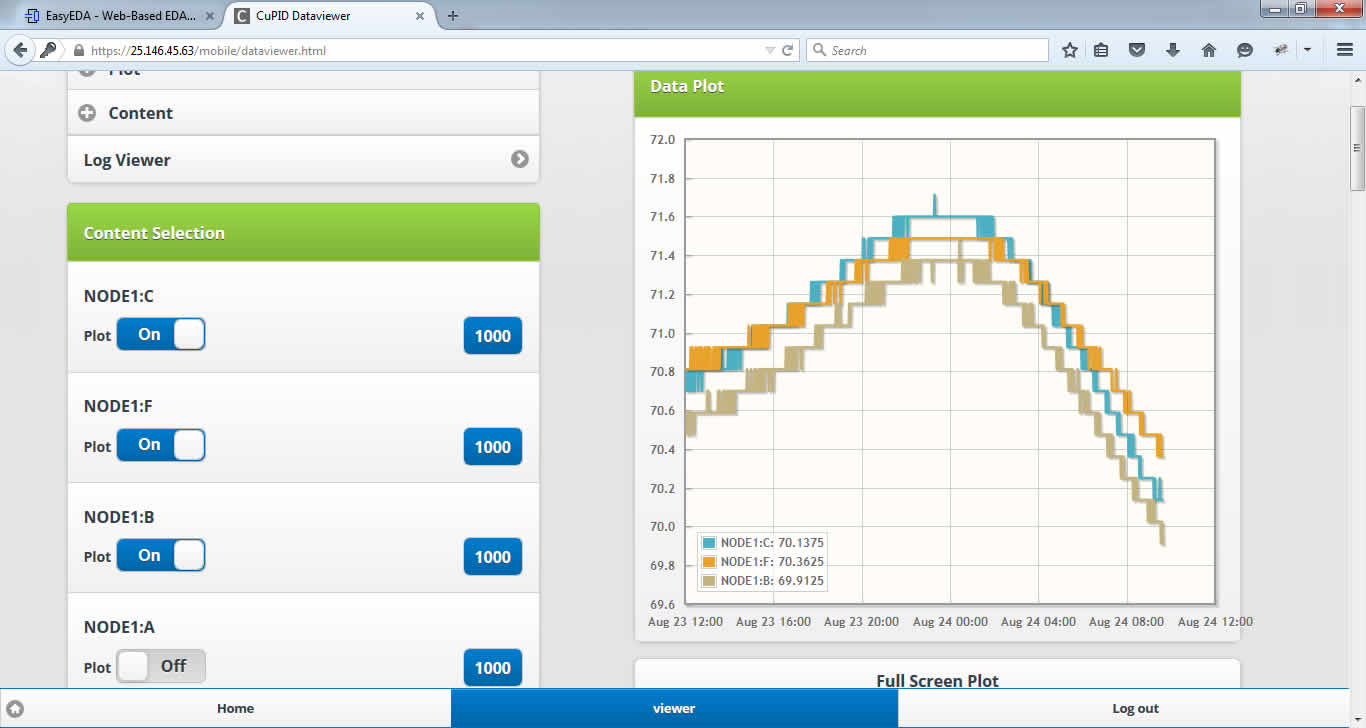
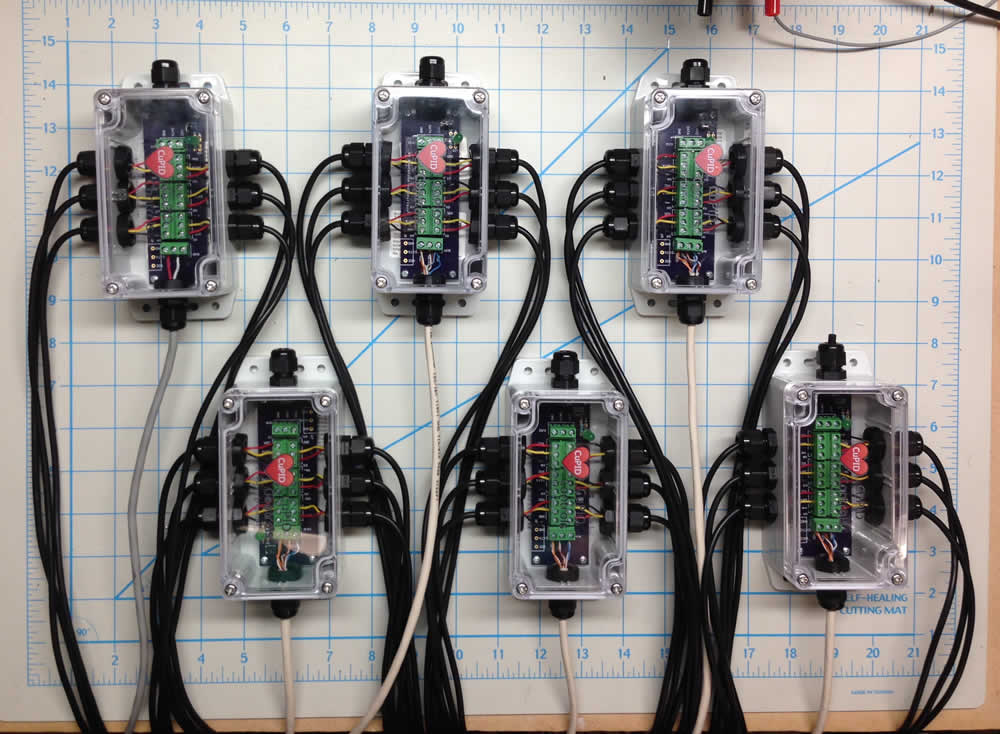
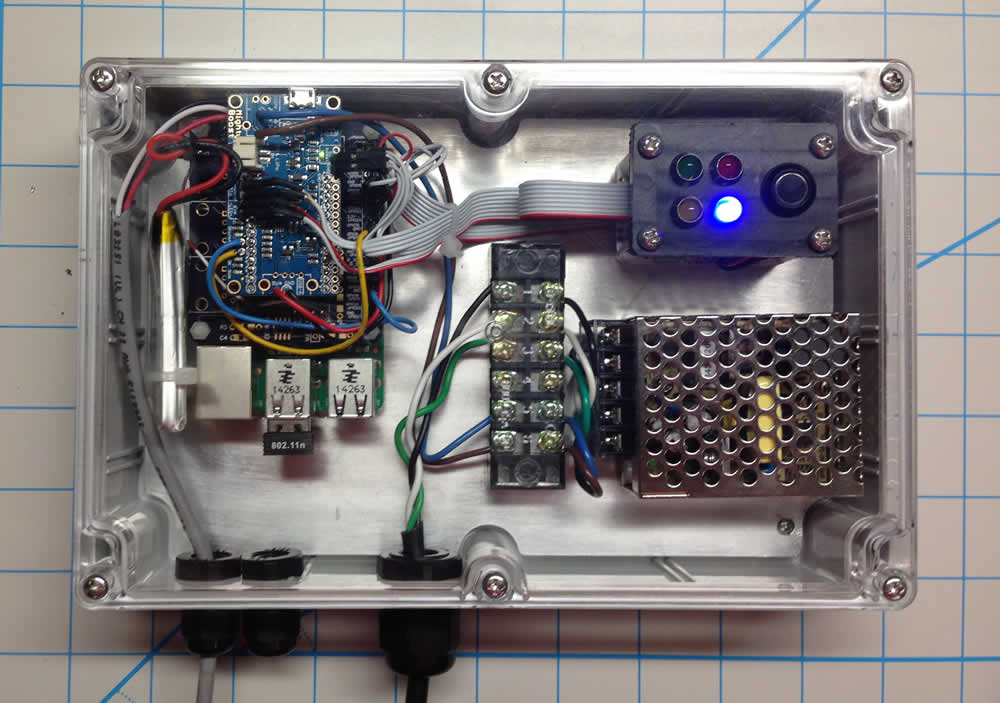
This project involved monitoring solar modules out in the wild. The temperature was logged continuously at six points per node, with the deployment here comprising six nodes for a total of 48 sensors. These were all on a single bus, utilizing the 1Wire protocol to transmit temperature data over three wires over a distance in excess of 100m.
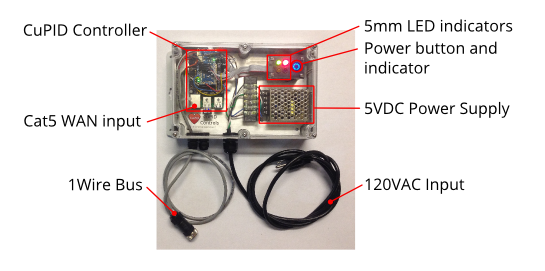
The sensor gateway was connected via VPN for web-enabled view and access of data from anywhere in the world. On top of this, Interface Innovations is able to continuously update, monitor and troubleshoot system performance on-call. Feature requests and additions were addressed in real-time.
Anemometer and pyranometer were later added with a DAQ for read inputs. Standard iicontrollibs and cupidweblibs were used for this project.
A few details:
- 100% Web interface
- Built-in power management board with backup Lipoly battery for backup in power outages and graceful shutdown when necessary
- Bus extendable (nearly infinitely)
- Individually addressable temperature sensors with unique ROM identifiers
- LED indicator status lights for field service
- Waterproof sensors accurate to within 0.5C, precision selectable 9-12 bits
- RF communication is an easy optional add-on for remote sensors in this configuration
Automated Chemical Synthesis
Automated Chemical Synthesis System
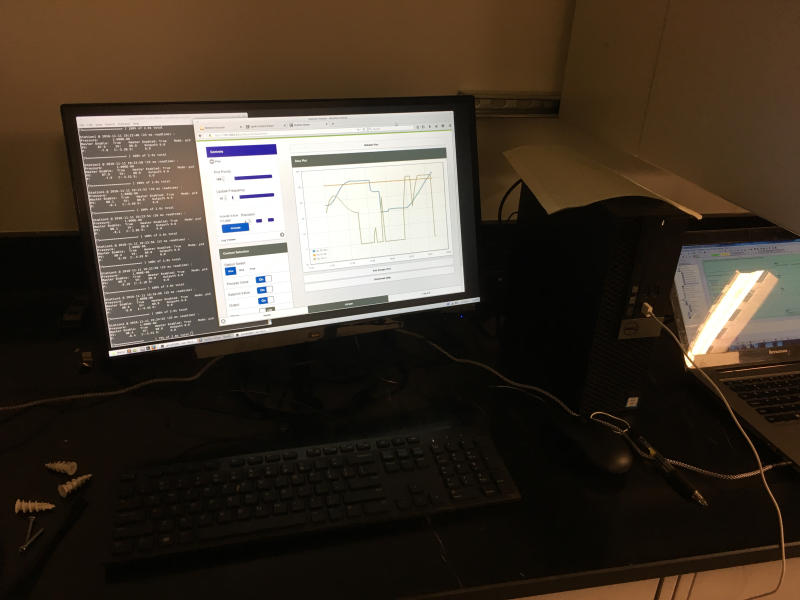
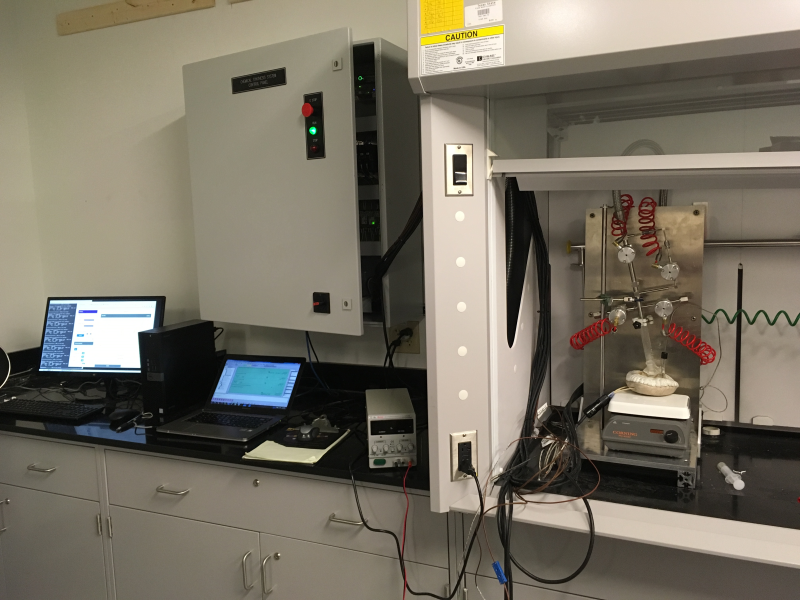
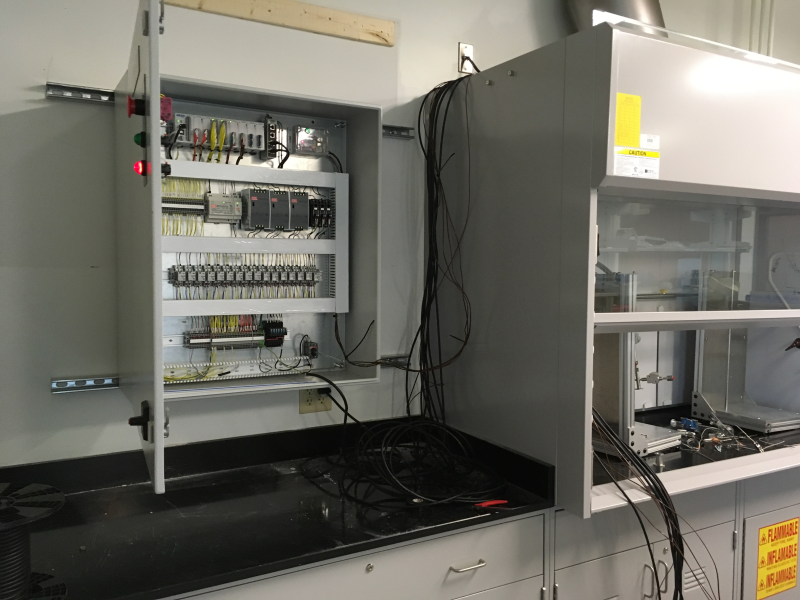
This project was a complete hardware and software solution for chemical synthesis of semiconductor nanocrystals.
The control panel shown controls three synthesis control stations, each with four pneumatic valves, an SSR-powered heater with relay interlocks, monitored with four thermocouples. are read by a PLC, with heaters controlled by custom PID.
High-level control is handled by a scalable, object-oriented Python API that communicates with the PLC over Modbus TCP/IP. The API has hooks for a web interface, which was also provided, allowing for monitoring, logging and control of the synthesis tool from anywhere with a web browser.
Kegwasher Controllers
Simple OEM Kegwasher Controllers
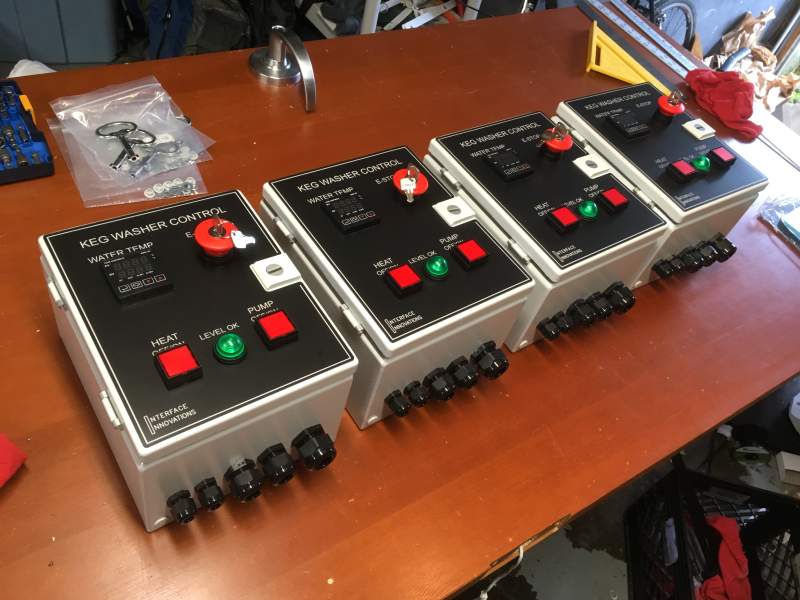
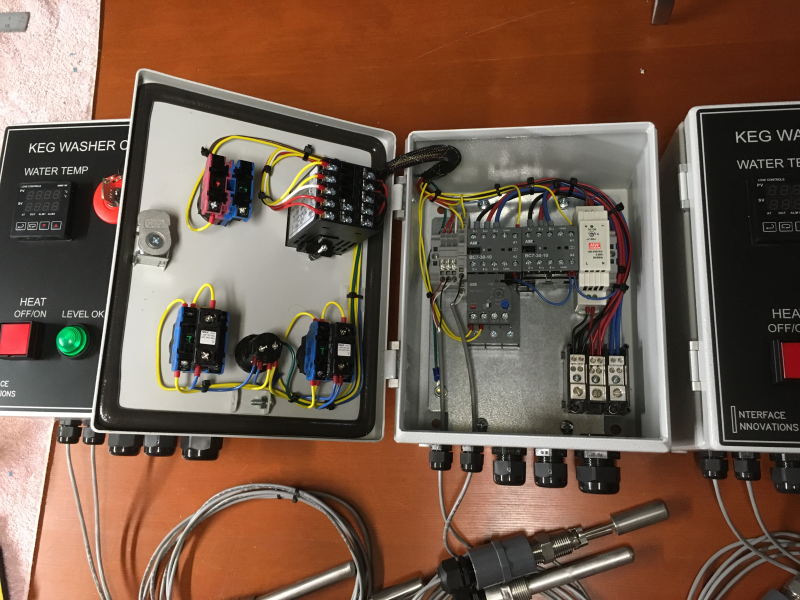
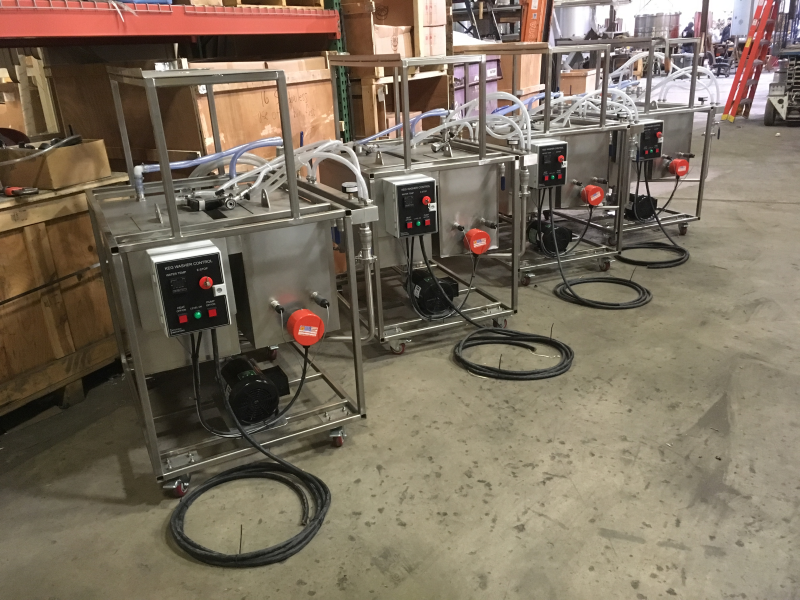
This project began as a custom request and has turned into a regular production project for Practical Fusion LLC. Simple Stuff: Pump Output (contactor with overload), heating element output (contactor), with RTD temperature sensors and level float interlock on everything. All in a IP65 enclosure with a clean interface.
Heater Control Panel
Heater Control Panel
A simple, four-zone heater panel satisfying NFPA requirements. This panel was built for integration into a LabVIEW testing and acquisition environment. Drivers for the specialized controllers were developed, as well as a dashboard HMI.